Understanding gas refrigeration basics
What makes a gas fridge unique
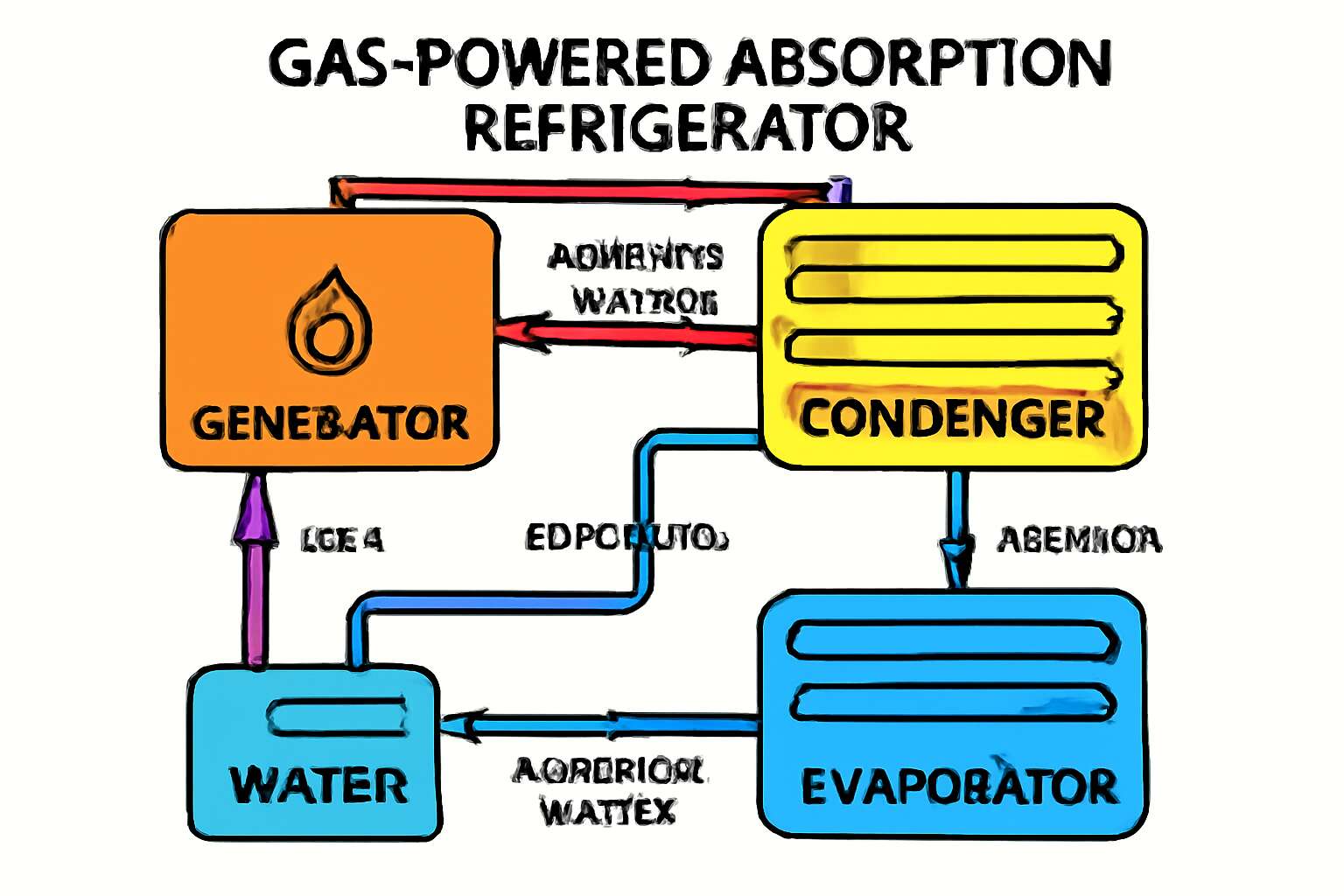
Across South Africa’s kitchens and off-grid homesteads, gas fridges quietly defy heat while keeping essentials cool. Cooling is the art of balancing energy and entropy, a truth seasoned technicians often remind us. In a how does a gas fridge work diagram, you’ll see a simple loop: heat from the gas flame energizes the cycle, while the refrigerant carries cold into the interior.
- The cycle carries refrigerant through a condenser, evaporator, and absorber
- The heat source—gas burn or solar—drives the loop
- Ventilation and safe placement keep performance steady
These units shine in rural South Africa where reliability matters more than speed, offering quiet, self-contained cooling that travels with you from veranda to veld. I’ve seen how a well-placed gas fridge makes long weekends workable and meals safer—proof that a diagram can become daily practice. The diagram is more than a drawing; it’s a reminder that energy and comfort walk hand in hand.
Overview of the ammonia-based cycle
In a South African kitchen where outages redraw daily life, a gas fridge hums as a quiet anchor of cool. Its promise isn’t speed but steadiness, the kind that keeps milk safe while the grid flickers.
Understanding gas refrigeration basics threads through the ammonia-based cycle. In the how does a gas fridge work diagram, the ammonia loop walks between hot and cold realms. A gas flame or solar heat pushes the cycle, while the refrigerant shuttles heat away from the interior.
The core journey can be pictured as a simple sequence:
- Condenser: ammonia vapor releases heat to the outside and becomes liquid.
- Evaporator: liquid ammonia absorbs interior heat and boils into vapor, cooling the space.
- Absorber: ammonia vapor is drawn back into a water-ammonia solution, keeping the loop sealed.
- Generator: heat from gas or sun frees ammonia from the solution, sending vapor onward to repeat the cycle.
The diagram remains language: heat and habit braided into everyday steadiness.
Energy sources and efficiency in gas systems
Outages redraw daily life in South Africa, and a gas fridge becomes a quiet anchor that keeps milk safe when the grid coughs. The promise isn’t speed but steadiness—a calm hum that matters when the lights fail. “Reliability isn’t a luxury here; it’s life support,” notes a local installer. For readers exploring the concept, how does a gas fridge work diagram offers a clear image of the cycle at work.
Gas refrigeration relies on simple energy inputs: a controlled flame or sun heat drives the loop, while the ammonia-water mix shuttles heat away from the interior. Efficiency arises from minimizing heat gain, maximizing heat transfer, and keeping the solution balanced. In practice, insulation and compact design matter as much as the flame.
Energy sources and options can be mapped like this:
- Gas flame for steady, fast response
- Solar heat during sunny days
- Waste heat recovery in larger appliances
Common terms and abbreviations
Across South Africa, outages stretch into hours and groceries falter. A gas fridge, by contrast, stays calm and dependable, a quiet anchor when the grid coughs. Local installers note spoilage can drop by a third during long outages. A simple how does a gas fridge work diagram offers a clear image of the cycle at work.
At its heart is a closed loop that moves heat from the interior to the outside. A flame or solar heat provides energy; an ammonia–water mix ferries heat away, while insulation keeps mischief from creeping in. The trick is balance—minimizing heat gain and maximizing transfer in a compact cabinet.
Common terms and abbreviations include:
- NH3 – ammonia refrigerant
- EVAP/evaporator
- COND/condenser
- EXPansion valve
Diagram components in a gas fridge
Key components shown in typical diagrams
Heat hates a well-drawn diagram, and in South Africa, a compact gas fridge diagram is a practical lifesaver. The how does a gas fridge work diagram highlights a few boxes—generator, condenser, evaporator, absorber—linked by neat tubing. It maps an ammonia-based cycle in a way your coffee-fueled brain can actually follow.
The diagram’s core components deserve a nod:
- Generator — gas-fired heater
- Condenser — releases heat
- Evaporator — creates cooling
- Absorber — re-dissolves ammonia in water
Reading the flow on the diagram clarifies the system’s charm for SA technicians and engineers alike.
Roles of heat exchangers and gas lines
Across South Africa’s service bays, a crisp diagram can cut diagnosis time by up to 40%. The how does a gas fridge work diagram reveals how heat travels through a tidy chain of boxes, not a fog of tubes.
The core diagram boxes—generator, condenser, evaporator, absorber—are joined by essential components that choreograph the ammonia-water cycle.
- Heat exchangers maximize heat transfer between hot and cold zones.
- Gas lines maintain steady pressure and directed flow.
- Absorber design influences how quickly ammonia re-dissolves in water.
Reading the flow on this diagram helps SA technicians spot issues fast—an example of how does a gas fridge work diagram in action. In one snapshot, the ammonia cycle shows a gas-fired generator driving vapor to the condenser, to the evaporator for cooling, then back to the absorber.
A good diagram is a map: clear paths, visible heat exchange, and honest hardware names keep the coffee-fueled brain sane.
Safety devices and controls in diagrams
In SA service bays, a crisp diagram can slash diagnosis time by 40%, turning a hazy gas fridge puzzle into a straight path. The how does a gas fridge work diagram maps the ammonia-water relay as a tidy chain—generator, condenser, evaporator, absorber—where heat and pressure move in orderly steps.
Safety devices and controls anchor the diagram in reality. Consider this quick inventory:
- Pressure relief valve
- High/low pressure switches
- Flame safeguard and gas shutoff
- Electrical interlocks
In practice, technicians read valve positions, sensor cues, and interconnections as a map—seeing where heat exchange is active and where a line could be blocked. A clean diagram keeps the coffee-fueled brain focused and the work moving with nocturnal calm.
Symbol legends and diagram conventions
Clean symbol legends shave diagnosis time in SA service bays. A precise how does a gas fridge work diagram turns a tangled tangle of pipes into a steady path, guiding technicians as heat and pressure move through the ammonia-water cycle. With a reliable legend, the diagram reads like a map rather than a maze, keeping decisions clear when the workshop hums with activity!
Symbol legends anchor the diagram. They translate lines, arrows, and icons into real components and processes. Typical markers include:
- Condenser/evaporator flow arrows
- Heat exchanger and absorber symbols
- Valves, sensors, and switch indicators
- Gas and liquid line designation
- Temperature and pressure callouts
Diagram conventions keep reading consistent across bays: line styles, color coding, and clear callouts show what state each line is in. Reading valve positions and sensor cues becomes routine, even on a late shift. A well-kept diagram stays legible under pressure.
Common misreadings and tips for interpretation
In the gas fridge diagram, every line is a breath and every symbol a memory of a choice under pressure. I watch technicians pause at a symbol and shift from puzzle to rhythm. For engineers asking how does a gas fridge work diagram, the answer lies in following the flow—heat slips forward, then cool replaces it with precision!
- Confusing gas and liquid lines—read color codes and line styles, not just arrows.
- Assuming a valve position changes with temperature when it actually shifts with cycle stage.
Tips for interpretation include verifying state markers against the cycle stage, cross-checking with safe-operation cues, and noting deviations caused by ambient heat or partial loads. A legible legend turns flux into familiarity, letting a busy workshop breathe easier.
In the South African workshops where space and speed collide, a clear diagram is not vanity but a disciplined tool—an anchor amid the clatter that keeps decisions calm and accurate.
The gas cycle explained with a visual diagram
Generator to condenser path (ammonia flow)
Heat in, chill out—the gas cycle is a compact dancer, turning heat into cold with a few clean steps. In a how does a gas fridge work diagram, the ammonia path from evaporator to condenser is mapped with clear arrows, turning complex science into a readable guide.
The gas cycle explained with a visual diagram generator to condenser path (ammonia flow) highlights four stages:
- Evaporation in the low-pressure evaporator
- Compression raises ammonia pressure and temperature
- Condensation dumps heat to the surroundings
- Expansion returns ammonia to the evaporator
Viewed together, the diagram offers a practical snapshot of how pressure, heat exchange, and safety devices cooperate to keep SA fridges running reliably.
Absorber and solution flow
Heat, quietly orchestrated, powers a small SA legend of cooling. The how does a gas fridge work diagram reveals the dancer’s steps, turning theory into a readable map that fits in a kitchen and a notebook alike.
At the heart of this system, absorber and solution flow orchestrate the cycle. The diagram shows ammonia leaving the evaporator as vapor, meeting the absorber where it dissolves into the liquid, and then riding onward with the solution to the generator for reheating.
Key junctions kept visible by the diagram include:
- Absorber binds ammonia into the solution.
- Solution flow circulates rich and weak liquids.
- Condenser dumps heat and closes the loop.
Evaporator cooling and heat absorption
South Africa’s load-shedding era makes every kitchen a mini laboratory, and a gas fridge stands out as a sober raconteur. Industry data suggests up to a third of off-grid kitchens in parts of SA rely on gas-powered cooling during outages. The how does a gas fridge work diagram renders the cycle legible, turning theory into a map you could tape to a fridge door.
- Evaporator cools the interior as ammonia evaporates, absorbing heat.
- Absorber draws ammonia into the strong solution, completing the cycle.
- Generator uses heat to release ammonia gas from the solution.
- Condenser rejects heat and returns the gas to its liquid state.
In visual terms, the diagram traces evaporator cooling and heat absorption as the ammonia slips from liquid to vapor and back again, a quiet, efficient dialogue between components.
Reading and interpreting gas fridge diagrams for installers
Identify input gas line and safety valves
Reading gas-fridge diagrams is a skill that separates the confident installer from the guesswork crowd. In South Africa, a well-traced line and a clearly labeled valve can cut troubleshooting time by a surprising margin. The trick is to spot the flow direction, the regulator, and the connectors at a glance—then your instincts click into place as if you’ve found the key to a tidy kitchen cabinet.
When you study how does a gas fridge work diagram, you notice how the input gas line and safety valves are depicted, and you can map the path with calm precision. Here are visual cues that help interpret common diagrams without ambiguity:
- The route of the input gas line from the regulator to the appliance connection and the direction arrow.
- Depictions of safety valves and any relief devices inline with the flow.
- Labels, color codes, and legend notes that confirm orientation and components.
Following the ammonia cycle through the diagram
In a session on how does a gas fridge work diagram, seasoned installers learn to trace ammonia with calm, surgical focus. The diagram becomes a narrative of pressure and trust—literacy that speeds understanding and keeps South African workshops running smoothly.
Following the ammonia cycle through the diagram, you spot flow cues at a glance. Here are visual cues that help interpret diagrams without ambiguity:
- Trace ammonia from condenser to absorber to evaporator
- Note symbols for heat exchangers and flow direction
- Observe legend notes confirming orientation
That clarity matches the human instinct for order. I teach South African installers to read these diagrams, letting the ammonia cycle reveal motive power and balance as a well-ordered kitchen breathes.
Interpreting symbols for heat sources
Reading gas fridge diagrams is a quiet art. I trace the path with a calm, methodical gaze, turning symbols into a plan installers can trust in the South African field. When I study how does a gas fridge work diagram, the heat sources reveal themselves as intentional flickers—their icons guiding where warmth enters and where the cooling comes from. I note flow cues without rushing, letting the linework tell me which way the ammonia or other working fluid travels.
To sharpen interpretation, I scan the heat-source symbols, the arrows, and any legend notes that establish orientation. A small, value-driven checklist keeps the eye sharp:
- Source icon meaning and position
- Flow direction cues and inlet/outlet markers
- Legend cross-checks for orientation
These cues are a scaffold for safety-critical maintenance and efficient repairs, especially in busy South African workshops where clarity matters and time is money!
Common diagram layouts and what they imply
Gas fridge diagrams speak in lines and symbols that cut through workshop noise. Reading how does a gas fridge work diagram, installers translate arrows and blocks into a calm map of the ammonia cycle, tracing heat in, cooling out, and the quiet exchanges that keep a fridge humming in a South African workshop.
Common diagram layouts arrive in small families, each hinting at orientation and flow. The following cues appear across most schematics:
- Side-by-side heat exchanger blocks signal parallel paths
- Vertical stacks indicate flow direction and where valves sit
- Color-coded lines help distinguish the absorber loop from the condenser and evaporator
Spotting these patterns sharpens interpretation and keeps maintenance work precise. In busy South African workshops, that clarity matters and time is money.
Maintenance safety and troubleshooting for gas refrigerators
Safety precautions when handling ammonia systems
Maintenance safety is the quiet anchor of a gas fridge’s reliability. how does a gas fridge work diagram shows that steady, mindful checks prevent leaks, safeguard people, and keep cooling efficient in South Africa’s diverse climate.
- Ventilate the workspace and avoid confined spaces during service or inspection.
- Wear PPE (gloves, goggles, long sleeves) and isolate the system before touching lines or connections.
- Use approved leak-check methods (soap solution) and never apply open flames near ammonia components.
- Engage a licensed technician and follow local regulations for handling ammonia systems.
Troubleshooting should stay within safety-first boundaries: frost on the evaporator, unusual noises, or a faint ammonia odor are signals to pause and consult a qualified technician. Avoid opening sealed components or attempting repairs yourself. Keep a simple log of symptoms and performance changes, and rely on professional service to interpret the diagram and diagnose issues within the ammonia cycle.
Routine inspection points on diagrams
In the field, safety is the quiet workhorse behind every gas fridge; studies show most failures come from skipped checks. The way we read a diagram—how does a gas fridge work diagram—becomes a safety map, showing that steady checks prevent leaks and keep cooling efficient in South Africa.
Maintenance safety hinges on simple routines that fit into any workshop schedule.
- Evaporator/condenser routes in the diagram; watch for frost or blockages
- Seals and joints shown; note wear or leaks
- Gauges, valves and regulators; check positions
- Controls and safety devices; note locations in the diagram
Troubleshooting stays safety-first: frost on the evaporator, odd noises, or a faint ammonia odor means pause and call a licensed technician. Do not open sealed components or attempt repairs yourself. Keep a simple log of symptoms and changes to help a professional interpret the diagram and diagnose ammonia-cycle issues.
Troubleshooting common diagram-indicated faults
Safety is the quiet workhorse behind every gas fridge on a busy South African site. Skipping routine checks is the surest path to leaks and rising costs, yet most failures start with a single overlooked point in the diagram.
Read the illustration as a safety map—the way how does a gas fridge work diagram guides you toward the root of trouble without forcing risky guesses. Watch for signs the diagram highlights, and flag anything unusual immediately.
- Frost or blockages along evaporator or condenser routes
- Seals and joints showing wear or leaks
- Gauges, valves and regulators left in unfamiliar positions
Keep a simple log of symptoms and changes; then pause and call a licensed technician. Do not open sealed components or attempt repairs yourself.




0 Comments