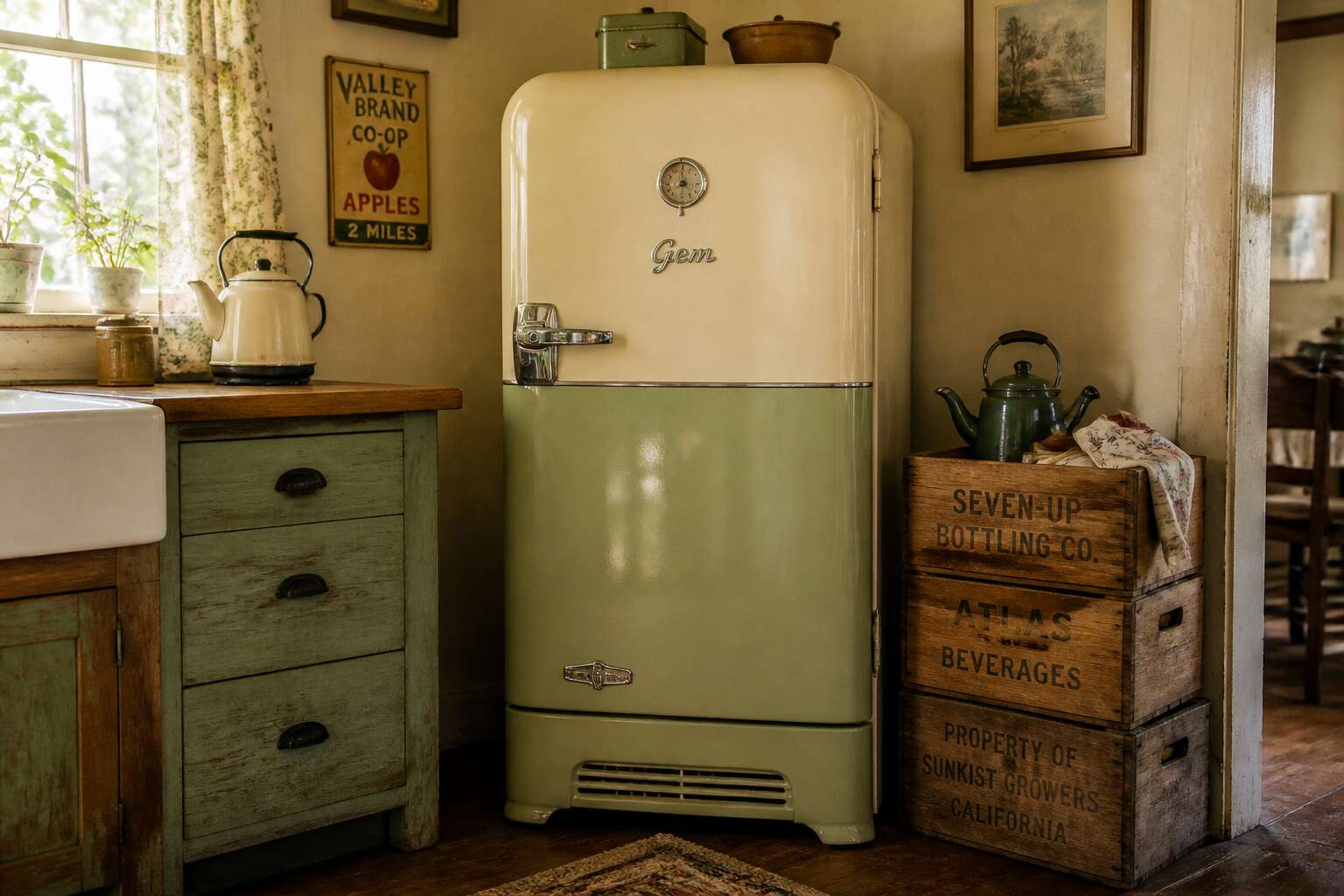
Why Choose a Pre-Owned Gas Refrigerator
Cost Savings Compared to New Models
The initial outlay for a new gas refrigerator can exceed the monthly rent on a city flat. A pre-owned unit changes the arithmetic. You sidestep the showroom markup and free up capital for the gas bottle or solar panel that actually powers the appliance.
Consider the depreciation curve. A new model loses a fifth of its value upon leaving the store. A gas fridge second hand has already absorbed that loss, so your resale risk is minimal. The savings extend beyond the sticker price. Older models use simpler mechanics, which technicians in Johannesburg or Cape Town can repair without proprietary software.
- The lower purchase price leaves room for a proper gas connection.
- Insurance premiums are often cheaper for older assets.
- Replacement parts for established models are easy to source.
When you buy a gas fridge second hand, you absorb none of the first owner’s depreciation, only the remaining utility. Many units come from estate sales or upgraded households, with years of service left in the compressor.
Ideal for Off-Grid and Remote Living
A gas fridge second hand does not plead for a power line; it hums. In the Cederberg, where Eskom’s reach fades into quartz and fynbos, that hum is the sound of milk staying cold. Off grid living asks for allies that demand little. This appliance runs on bottled gas, a fuel that ignores whether the municipal transformer sleeps. Because it lacks the grid tied circuitry of modern cabinets, it pairs effortlessly with inverter systems and solar panels. The thermostat clicks. The flame breathes. No software watches your usage.
I have hauled one up a gravel pass on a bakkie’s back axle. Dust, heat, irregular servicing, none of it fazes the steady evaporator. A simple thermosiphon system moves cold without pumps that break. For the remote homesteader, this is not a luxury. It is quiet continuity.
Environmental Benefits of Reusing Appliances
South Africa generates over 400,000 tonnes of e-waste each year, much of it from kitchen appliances. A gas fridge second hand does not add to that pile. It keeps a functional unit in active service, where the original materials continue to work. Manufacturing a new refrigerator carries a carbon cost. Every aluminium shelf and copper valve consumed fresh ore. Reusing skips that extraction entirely.
The environmental returns are measurable:
- One refurbished unit saves roughly 90 kg of iron and plastic from landfill.
- The embodied energy remains spent, not repeated.
- F-gas leaks from discarded cooling systems stay sealed.
When you buy this way, the burden on municipal waste sites shrinks. The appliance’s legacy becomes lower emissions per litre of cold storage, month after month.
Availability of Classic Reliable Brands
In South Africa, the second hand gas fridge market is dominated by a few enduring brands. Electrolux, KIC, and Crystal have served kitchens for decades. Technicians know their cooling systems. Spare parts remain available on local shelves. This availability of classic reliable brands gives a gas fridge second hand something valuable: a documented service history. You can ask when the thermostat was last replaced. You can inspect how the flame cap has aged. A new model offers no such record.
When you shop for a gas fridge second hand, you access machines built with serviceable components:
- Older compressors demand lower maintenance frequency
- Propane jets are straightforward to clean or replace
- Galvanised cabinets resist corrosion better than many current alloys
That familiarity translates into practical value. I have seen a 1994 Electrolux still cooling a farm kitchen in Mpumalanga. What a testament to steady engineering!
Key Factors to Evaluate Before Purchasing
Age and Model History
The serial number on a gas fridge second hand reveals more than age. It pinpoints the manufacturing year, and that matters because the cooling unit has a finite lifespan. Most absorption units run efficiently for ten to fifteen years. A fridge from the early 2000s might still perform well, but one from the 1980s likely needs intervention.
Model history carries equal weight. Ask whether the previous owner kept it in a caravan or a permanent kitchen. Constant movement loosens internal seals. Service stickers on the back panel suggest a conscientious owner.
Before committing, verify these details:
- Cross-reference the serial number with the manufacturer’s database.
- Ask if the fridge ever ran on its side, which can block the cooling tubes.
- Inspect the burner assembly for rust, indicating moisture exposure.
A documented past for your gas fridge second hand beats a low price.
Overall Condition and Wear
A gas fridge second hand often reveals its true condition through small details. The door seals, the hinges, the burner plate. Each component shows daily use or neglect. I have seen units that looked perfect from the front, yet the cooling fins carried a thick layer of dust. That dust blocks heat exchange and shortens the cooling unit’s life. When you inspect a unit, focus on these specific areas:
- Cracks or flattening in the door gasket. A weak seal forces the cooling unit to run constantly.
- Rust in the interior corners, especially where the evaporator meets the wall.
- A yellow burner flame. That indicates incomplete combustion, often from a clogged jet.
These quiet failures turn a seeming bargain into a costly repair.
Brand Reputation and Parts Availability
When you buy a gas fridge second hand, the brand name tells you more than the price tag ever will. Established manufacturers with strong local support in South Africa reduce your risk. Their service centres have seen every model, and their spare parts catalogues remain current. Obscure imports may look identical, but a failed ignitor can take months to source.
Parts availability should guide your decision. Before you commit, ask some direct questions!
- Do local suppliers stock this brand’s gas valves and thermostats?
- Will a certified technician accept the repair?
- Does the manufacturer still maintain a presence in South Africa?
Many owners only discover the cost of a rare component after the purchase. For an unknown gas fridge second hand, replacement parts are often unavailable. You then face the expense of improvisation or a shortened lifespan for the appliance. A little research into brand support before you pay will spare you from a costly mistake.
Cooling System Type and Efficiency
Most gas fridges lose a third of their cooling power when ventilation is compromised. A gas fridge second hand demands scrutiny of its cooling system type before you commit. Absorption units rely on a thermosiphon loop, silent but sensitive to levelling. Compressor models cool faster and tolerate tilt, yet they consume more electricity. Efficiency is not guaranteed by age, so inspect the burner and flue for soot. A blocked jet doubles gas usage without any warning.
- What is the annual gas consumption rate?
- Does it maintain temperature on a hot day?
Test the cooling performance yourself. A gas fridge second hand that cannot keep milk cold in January will frustrate you daily. Check internal air circulation and door gaskets before the brand badge. Measure cabinet temperature after two hours of running. If it sits above 7 degrees Celsius, the efficiency is simply not there.
Safety Features and Compliance
When you buy a gas fridge second hand, safety must override nostalgia. A charming 1980s model may appeal to you, but if it lacks a flame failure device, it can fill your kitchen with gas without warning. That risk outweighs any price discount.
Check compliance with South African standards. A valid certificate of compliance, or COC, confirms an authorised technician inspected the unit. Look for ventilation gaps and corrosion on the gas line. A blocked flue or rusted jet can produce carbon monoxide, which is lethal.
- Rust on the burner
- Expired gas hose dates
- Sticky safety valves
Service records reveal maintenance honesty. A gas fridge second hand with proper certification and intact safety components will protect your household. Without those, you are buying a liability, not an appliance.
Where to Find Quality Used Gas Fridges
Online Marketplaces and Classifieds
Across South Africa, the hunt for a reliable gas fridge second hand often begins where old appliances wait for their next chapter. Online marketplaces like Gumtree and Facebook Marketplace hold surprising variety, provided you search with patience. Classifieds from local papers still hold useful finds, especially in farming communities where off-grid living is second nature.
Common avenues worth browsing include:
- Gumtree South Africa, with daily postings from private owners
- Facebook Marketplace, where user histories offer extra reassurance
- Regional classifieds websites that serve smaller towns
Each listing tells a story, but verification matters more than charm. A well maintained gas fridge second hand from a private seller can outlast a new model, if you do your due diligence. Durable appliances in this market rarely stay listed for long, so timing shapes every successful hunt.
Local Appliance Dealers and Refurbishers
In polite South African society, the question of where you sourced your gas fridge second hand separates the shrewd from the gullible. At a reputable refurbisher, they let you open the door and inspect the seals before you commit. These establishments often offer a short warranty, which no private seller can match.
Some dealers specialise in particular brands and keep spare parts on the shelf. Ask whether they replace thermostats and gas valves as a matter of course. The answer reveals more than any sales pitch.
In my experience, smaller dealers in rural towns are quietly reliable and seldom sell a unit destined to fail within a month. Bring a checklist:
– Check the door seal
– Ask about service history
– Request proof of a gas test
A dealer who hesitates at these questions when selling a gas fridge second hand is not worth your time.
Estate Sales and Auctions
Estate sales and auctions reward patience. The bidding floor is noisy, and most attendees chase furniture, yet a gas fridge second hand sits unnoticed in a corner. In my experience, these units come from households where they functioned until the end. The owner passed away, the family wants a quick sale, the fridge becomes a footnote. That is your opening.
Check the unit’s serial number against the manufacturer’s chart. Look for discoloured paint near the burner. At smaller country auctions, you might pay a fraction of a refurbisher’s price. Before bidding, confirm you have:
- Transport that handles the weight
- A method to test the gas line on site
- The patience to walk away from a poor seal
Estate sales are cash and carry. No warranty, no returns, and a gas fridge second hand here is strictly as is. Bring a trailer, a flashlight, and a straightforward approach to negotiating.
Off-Grid Community Networks
In off-grid communities across South Africa, reputation determines who gets the best equipment. A gas fridge second hand that survives in the Karoo has already proven itself against dust, heat, and poor roads. These networks operate on trust. When a neighbour recommends a unit, they stake their own standing on it.
The best leads come from farmers’ cooperatives and community notice boards. The people selling here are not flippers; they are upgrading after twenty years of faithful service. They know the service history, the burner quirks, the exact sound of a healthy flame. That information is priceless, and it costs nothing.
Check these sources:
- Church and community centre notice boards in rural towns
- Off-grid living WhatsApp groups and regional forums
- Agricultural cooperatives where farmers gather
A gas fridge second hand found this way often comes with honest history and a fair price. No middleman, no polish, just the truth of how it ran in someone’s kitchen.
Inspection and Testing Checklist
Visual Examination of the Cabinet and Seals
The moment you close the door of a gas fridge, the seal determines how efficiently the unit runs. When evaluating a second hand unit, visual inspection starts with the cabinet’s outer shell. Look for dents, rust patches, or paint bubbling. In South Africa’s coastal humidity, corrosion can spread quickly. Open the door and examine the interior liner. Cracks or discoloration may indicate past overheating or impact damage.
Next, focus on the gaskets. I usually press my hand against the closed door; you should feel even resistance. Here is a quick checklist:
- Run a banknote along the seal edges to detect gaps.
- Check for stiffness or tackiness in the rubber.
- Look for mould growth in the gasket folds.
A weak seal forces the burner to cycle more often, wasting fuel. A thorough visual exam of the cabinet and seals reveals whether that gas fridge second hand is a bargain or a burden.
Testing the Cooling Performance
Once the seals pass muster, the real proof lies in the cooling performance. I always run a functional test before committing to a gas fridge second hand. Place a reliable thermometer on the middle shelf, close the door, and let the unit run for at least four hours. The internal temperature should settle between 2 and 5 degrees Celsius in the fresh food section. A slow drop or erratic cycling signals weak gas pressure or a failing thermocouple.
Here is a simple checklist for the cooling test:
- Monitor the temperature every 30 minutes.
- Listen for the burner to ignite and extinguish at regular intervals.
- Check for frost patterns on the evaporator plate.
An uneven frost layer indicates poor heat exchange. If the fridge struggles to cool, walk away. That gas fridge second hand might need costly repairs.
Checking the Burner and Gas Connections
The burner and gas connections demand close attention when evaluating a gas fridge second hand. A faulty connection can turn a practical appliance into a hazard, so I never skip this inspection. Begin by examining the gas line for cracks, kinks, or rust. Use a soapy water solution on every joint; bubbles mean a leak that must be addressed.
- Inspect the burner nozzle for debris or corrosion
- Check the thermocouple for proper alignment
- Listen for a steady hiss, not an irregular sputter
A healthy flame burns blue with a sharp inner cone. Yellow or flickering flames suggest incomplete combustion. If the ignition fails repeatedly, the gas valve may be failing. A certified technician can verify the pressure before you commit to that gas fridge second hand.
Verifying the Thermostat and Controls
A faulty thermostat can silently waste gas while keeping your food lukewarm. When I evaluate a gas fridge second hand, I treat this control as the first clue to hidden trouble.
Set the dial to the coldest position and allow two hours of running time. Then measure the interior with an independent thermometer. A difference greater than three degrees suggests the sensor is drifting. I also rotate the dial through its full range, listening for a definite click at each stop.
- Check the knob for stiffness or free spinning
- Inspect the control panel for burn marks
- Confirm the flame adjusts promptly when you change the setting
For any gas fridge second hand, the burner must react within seconds of a thermostat change. A slow response points to a worn gas valve or a blocked line, both repairs that quickly exceed the value of the appliance.
Asking for Service History
Service history is the quiet autobiography of every machine. For a gas fridge second hand, those faint receipts and handwritten notes reveal whether it has lived a gentle life or survived on borrowed time. Ask the seller for any maintenance records, gas service certificates, or repair invoices. A unit with a documented past is worth more than one with a silent, mysterious life.
- Check the fridge’s serial number against manufacturer records
- Ask when the gas line was last pressure tested
- Request proof of any replaced thermocouples or valves
- Confirm whether a qualified technician performed the servicing
I once tested a gas fridge second hand whose history was a blank page. The cabinet looked immaculate, but the service log told no tales of the rust inside. That silence cost the owner dearly. Before you hand over any cash, demand the full story. A truthful history is your insurance against a hungry flame and a spoiled dinner.
Maintenance and Longevity Tips
Proper Ventilation and Clearance
A gas fridge second hand fails faster from poor airflow than from old age. South Africa’s heat punishes absorption units without proper clearance. The back and top must shed heat continuously. Cramped instalments raise gas consumption and shorten service life.
Maintenance follows a steady rhythm. Wipe condenser fins monthly. Clear the burner area of dust and spider webs. A blocked flue carries a real carbon monoxide hazard.
A seasonal routine checks three points:
- The door gasket. Close the door on a strip of paper. If it pulls free, replace the seal.
- The burner jet. Clean it with fine wire, never a toothpick.
- The flame. It should burn sharp and blue.
Inside any gas fridge second hand, ventilation grilles stay open. Allow 50mm clearance on each side and 100mm above the cabinet. That modest gap separates a decade of cooling from an early breakdown.
Regular Cleaning of Burner and Flue
The burner and flue in any gas fridge second hand demand ritual attention. Soot and dust collect in the narrow passages where the flame does its quiet work. A cotton swab dipped in methylated spirits reaches crevices that fingers cannot touch. The flue, that vertical passage for exhaust, builds a crust of carbon over months of faithful service.
Begin by isolating the gas supply. Remove the burner shield and inspect the jet for blockages. A fine wire clears the orifice cleanly, where a toothpick would splinter and clog further. Then brush the flue’s interior with a soft bottle brush, letting the loose debris fall away. This simple rhythm preserves the absorption cycle’s efficiency.
- Clean the burner jet every six months
- Inspect the flue for soot build-up quarterly
- Check the flame colour after reassembly
South African dust carries a fine silica that settles deep into these components. A gas fridge second hand with a clean flue burns less gas and holds its cool through Highveld summers without complaint.
Replacing Worn Door Gaskets
Door gaskets are the quiet guardians of a gas fridge second hand. A worn seal lets cold air escape, forcing the burner to work harder. The magnet strip loses its grip over time. A simple test: close the door on a strip of paper. If it slides out easily, the gasket has failed.
Replacement takes twenty minutes. Buy a genuine gasket for your model, not a generic strip. Remove the old one by pulling it from the channel. Clean the groove with warm soapy water to remove grease and old adhesive. Press the new gasket into place, starting at a corner and working around.
- Soak the gasket in warm water first to soften the rubber
- Align the corners before pressing the centre sections
- Close the door and check for even contact along all edges
A fresh seal keeps the interior stable and cuts gas consumption noticeably. On a gas fridge second hand, this small repair extends the life of the cooling system for years.
Annual Professional Servicing
The annual professional servicing of a gas fridge second hand is not a luxury; it is a necessity. A certified technician sees what a casual owner cannot. They measure gas pressure at the burner and check the flue for soot buildup. They verify the thermostats calibration against an independent thermometer. These checks take under an hour but they expose weaknesses before they become failures.
For a unit purchased pre owned, this inspection is particularly valuable. The previous owners history is often incomplete. A professional can identify a fading burner or a compromised safety valve. Their report tells you exactly what the fridge needs for another decade of service. The cost of this visit is small when measured against the price of a cooling system that dies quietly in the night.
- Checking the gas pressure regulator for consistency
- Inspecting the flue for carbon deposits or blockages
- Testing the thermocouple response time
- Verifying the burner flame colour and height
Owners who skip this yearly ritual often face a fridge that cools unevenly or fails completely. A professional service records the unit’s baseline condition. Next year, the technician compares readings and spots gradual decline early. This habit transforms a gas fridge second hand from a gamble into a reliable household asset.
Common Pitfalls and How to Avoid Them
Overpaying for an Aging Unit
A gas fridge second hand can appear as a bargain while hiding years of quiet decline. Sellers price from memory, not measurement. You pay for remaining reliability, and the gap between what you spend and what remains widens with every year of service.
Common pitfalls include paying a premium for a familiar badge, assuming an older unit holds its value, or accepting a high price simply because the fridge still runs cold. Each leads to the same outcome. You fund someone else’s disposal cost.
Compare at least three current listings in your area before negotiating. If a seller refuses to move below their asking price, walk away. The difference funds the service appointment that an aging unit will inevitably demand.
Hidden Rust and Corrosion Issues
When shopping for a gas fridge second hand, rust hides beneath a fresh coat of paint. The unit may look pristine from the front, yet the base plate could be crumbling into orange dust. Corrosion attacks the evaporator tray, the burner housing, and the brackets that hold the cooling unit in place.
- Surface rust on the door hinge indicates years of coastal humidity.
- Flaking metal near the gas line signals a leak risk.
- Discoloured coolant pipes reveal electrolysis between dissimilar metals.
That last point matters most! Dissimilar metal corrosion, or galvanic action, eats through copper and steel where they meet. Once the flue corrodes internally, carbon monoxide can escape into your living space. The apparent bargain of a gas fridge second hand unit disappears when the safety inspection fails.
Incompatibility with Propane or Butane
In South Africa, the gas bottle on your braai is usually propane, but butane bottles still appear in remote areas. A gas fridge second hand unit might have the wrong jet fitted for your gas type.
Using incorrect gas without swapping the burner jet leads to incomplete combustion. The flame turns yellow, soot coats the flue, and cooling performance drops sharply. I have seen units where the owner connected a butane cylinder to a propane-tuned fridge, and the freezer barely reached 10 degrees!
- Check the gas jet size stamped on the burner.
- Confirm the regulator pressure matches the gas type.
- Ask the seller which gas the unit was last run on.
The jet size determines gas flow. A gas fridge second hand advertised as perfect for camping might only be configured for butane. That matters in South Africa, where LPG and butane pressures differ.
Missing or Damaged Components
A gas fridge second hand may look pristine from the outside, yet missing components reveal the true condition. I once opened a freezer to find the interior shelf gone, replaced by a wire coat hanger. That seller expected me to trust the cooling performance. I did not.
Damaged parts matter beyond cosmetics. A cracked crisper drawer, a snapped door hinge, or a missing burner access panel each carry replacement costs. In South Africa, sourcing these for older models can take weeks. Check every fixture before you negotiate.
- Inspect the door seal for tears or brittleness.
- Confirm the thermostat knob and lighting cover are intact.
- Look for the flue baffle and burner jets underneath.
A missing flame failure valve is not a small issue. It is a safety hazard. Ask the seller to list any absent parts in writing. A gas fridge second hand with complete components saves you from hunting spare parts later.




0 Comments