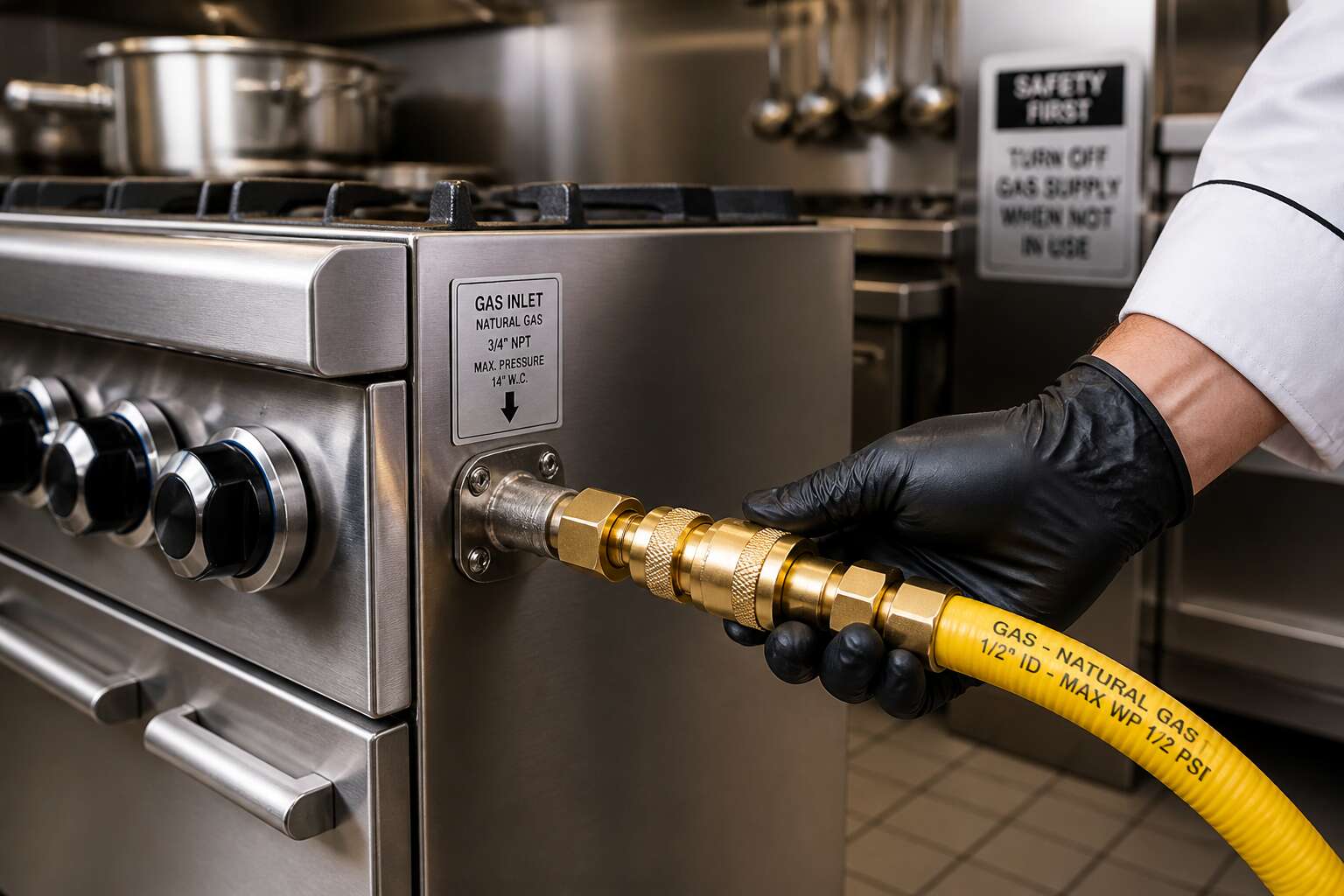
Understanding Commercial Gas Quick-Connect Systems
Ever seen a kitchen crew break into a sweat trying to detach a gas line? The commercial gas appliance quick connect changes that. It is a simple coupling, but its engineering is clever.
In Cape Town’s busy restaurants, this system lets you swap a grill for a fryer in minutes. No spanners, no panic. The key is the positive seal. It locks tight, then releases with a twist.
Consider what a proper setup requires:
- Correct pressure ratings for your appliances.
- Certified hoses that match local standards.
- A shut-off valve upstream for safety.
Getting it wrong means leaks. Getting it right means your commercial gas appliance quick connect pays for itself daily. It is a small part, yet it is essential. Trust the mechanism, but verify the installation.
Benefits and Limitations for Businesses
A single minute of downtime in a busy kitchen can cost more than the day’s profit margin. That is the brutal arithmetic behind the rise of the commercial gas appliance quick connect in South African restaurants and hotels.
The core benefit is operational flexibility. A unit fitted with a quick connect can be rolled out for deep cleaning, swapped for a backup during peak service, or reconfigured for a seasonal menu change without waiting for a technician. This translates directly into faster turnarounds and reduced labour costs for maintenance crews. You are not just saving minutes; you are protecting your entire service flow.
– Speed of installation and removal, cutting changeover time from hours to minutes.
– Reduced risk of thread damage and gas leaks from repeated manual tightening.
– Lower lifetime costs due to fewer callouts for simple appliance swaps.
However, the limitations demand respect. The connector is a mechanical joint, and its seals can degrade over time, especially in high-heat environments. A rapid connection can lull staff into complacency, bypassing the strict inspection rituals that traditional fittings force upon them.
Every quick connect must be validated for the specific gas type and pressure of your venue. Mismatched components can create a silent, dangerous failure point. The efficiency is real, but it is a hostage to the quality of the hardware and the discipline of the person locking it into place. Your business gains speed, yet you must carry the burden of that responsibility daily.
Installation Guidelines and Best Practices
Each installation begins with a meticulous inspection of the work area. You are not merely connecting a hose; you are integrating a vital energy artery into a busy commercial kitchen. The stainless steel braided line must be checked for kinks, while the receiving bayonet needs to be perfectly clear of grease and debris. This simple act of diligence prevents a host of operational headaches later.
The correct procedure is not subjective. It demands a level of precision that leaves nothing to chance. Verify the gas type and pressure ratings on the equipment plate against the supply line. You should always ensure the locking collar is fully engaged, producing a distinct click that confirms a secure fit. That audible confirmation is the sound of safety.
Here are the critical steps to follow for a faultless setup:
Once the coupling is mated, the work is not finished. You must verify the valve core engages properly to allow full flow to the burner. A slow opening of the main valve will purge the line gently, avoiding pressure surges that can trip safety solenoids. Many operators overlook the importance of the secondary restraining cable. This small wire rope is mandatory in seismic zones and busy kitchens where equipment gets moved around constantly. It is the unsung hero of the system.
The physical positioning of the drop hose also matters greatly. Avoid sharp bends that might act as a stress riser on the fitting. Gravity should allow the loop to hang naturally without pulling on the bayonet. Creating a service loop at floor level protects the coupling from the constant tugging associated with mobile cooking equipment. It is a simple principle of stress relief that offers immense long term value. For a commercial gas appliance quick connect, the installation is the single greatest determinant of performance and lifespan. This is where the entire operation stands or falls, so take the time to get it right.
Maintenance, Troubleshooting, and Lifespan
A commercial gas appliance quick connect is a small component with a serious job. It handles the daily abuse of kitchens that never sleep. Maintenance is not glamorous. It is a ritual of inspection and respect for the seal. The rubber gaskets harden. The locking mechanism loses its bite. When troubleshooting a commercial gas appliance quick connect, look for the subtle signs. A faint gas smell, a click that sounds off, a wobbly connection. For a unit used constantly, expect a lifespan of five to seven years. That number shrinks with grease buildup and careless handling. Think about what the quick connect endures each shift. The heat, the motion, the coupling and uncoupling. It wears down.
– Check the gasket for cracks monthly.
– Test the locking collar by feel.
– Listen for hissing when the line is pressurized.
These small acts extend the service life and prevent the catastrophic failures that close businesses. Reliability depends on the attention it gets.
Regulatory Compliance and Code Requirements
In South Africa, the pressure to comply isn’t bureaucratic. It’s existential. Every commercial gas appliance quick connect must satisfy SANS 10087-1 and local by-laws. That means verifying pressure rating, shut-off valve access, and flexible connector length.
These requirements feel tedious until you understand the consequences. A single overlooked seal on a commercial gas appliance quick connect can turn any kitchen into a liability. I have seen inspectors halt operations over a mismatched coupling. The code exists to protect people, not to punish chefs. When you read it carefully, every clause speaks to a specific failure mode.
- Check the manufacturer’s certification for the specific appliance.
- Confirm the connector’s maximum operating pressure.
- Verify the installation date and re-test intervals.
Compliance is a pact you make with every person who walks through that service door. It is quiet, unglamorous, and non-negotiable.




0 Comments