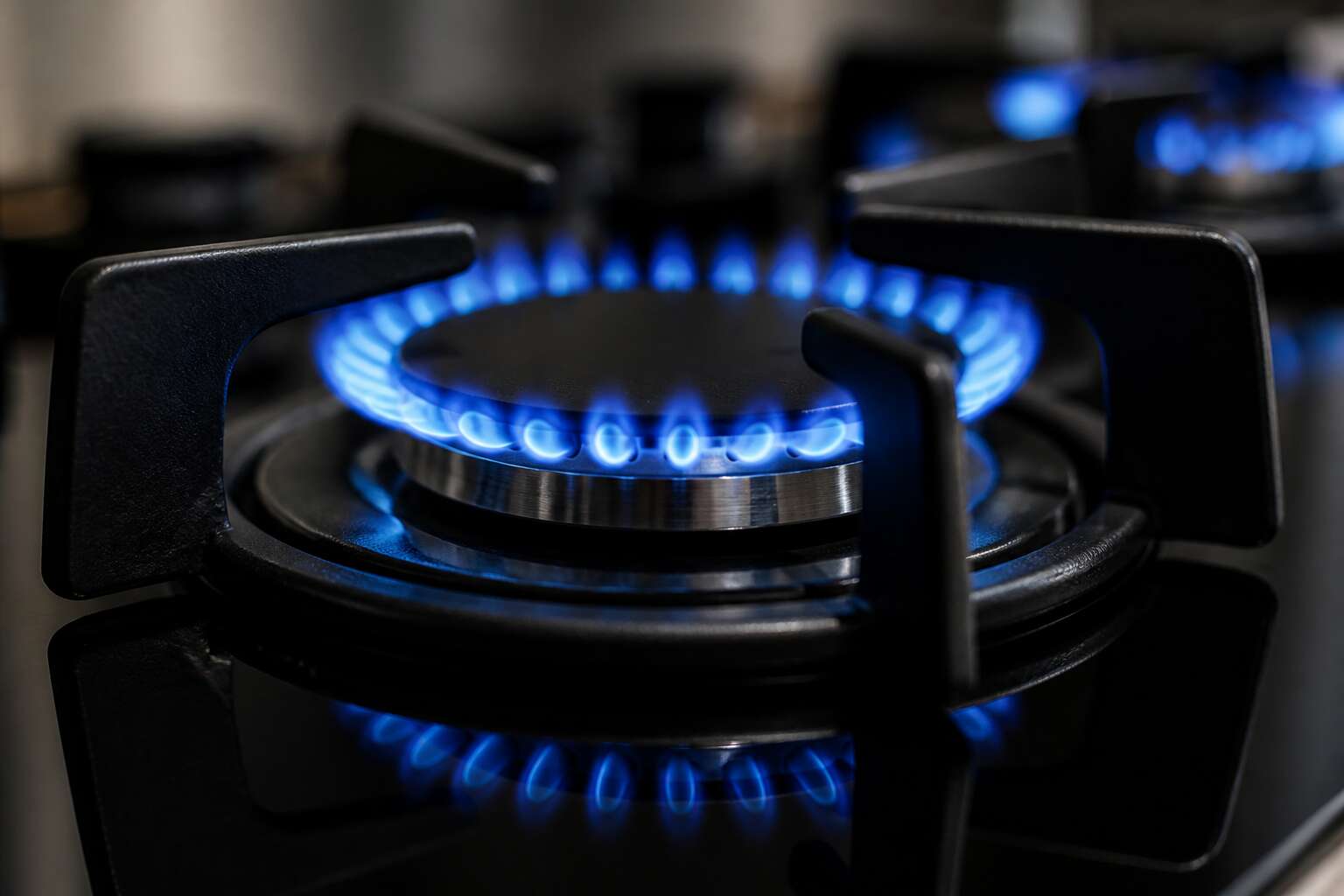
Understanding Megajoule Ratings for Gas Appliances
What Exactly Does a Megajoule Rating Measure?
In South Africa, the megajoule rating on a gas appliance is the number everyone quotes and few understand. A gas appliance mj rating tells you the maximum heat output per hour, expressed in megajoules. For example, a 10 MJ/h hob burner delivers twice the raw energy of a 5 MJ/h model, but that says nothing about efficiency or cost.
This rating measures capacity, not performance. It indicates how much heat the appliance can generate when turned up fully. Ovens, hobs, and water heaters all carry these numbers, yet they rarely match real-world gas consumption because of burner design and pot size.
- Hobs: 5 to 15 MJ/h
- Ovens: 10 to 20 MJ/h
- Water heaters: 30+ MJ/h
The gas appliance mj rating serves as a reference for comparison. Higher ratings correlate with faster heating, but they also correlate with greater gas usage.
Why MJ Ratings Matter for Performance and Efficiency
Consumers treat the gas appliance mj rating as a verdict. One number, one decision. But the true cost of cooking with gas lives in the space between the rating and the pot on the flame. A high rating can shorten boiling time, yet it also demands more from the gas line and the wallet. The appliance that heats fastest is rarely the one that heats cheapest.
Efficiency depends less on the listed figure and more on how completely the burner converts fuel into usable heat. That conversion shifts with flame spread, pan diameter, and even local gas pressure. Some owners see a gas appliance mj rating and assume larger is better. In practice, the balance between output and control determines daily consumption. The rating sets an upper boundary, not a guarantee of performance.
How MJ Ratings Compare to Kilowatts and BTUs
Understanding a gas appliance mj rating becomes easier when you translate it into familiar units. One megajoule equals roughly 0.28 kilowatt-hours or about 948 BTUs. A 10 MJ burner therefore delivers nearly 9,500 BTUs of heat. But the comparison is not arithmetic alone. Kilowatts measure electrical power, while megajoules measure total energy. BTUs, the imperial standard, still appear on many imported stoves. South African consumers often see all three on the same spec sheet.
The conversion works like this:
– 1 MJ = 0.28 kWh
– 1 MJ = 948 BTU
– 1 kW running for one hour = 3.6 MJ
The gas appliance mj rating tells you the burner’s maximum output, not its control range. A 5 MJ burner and a 15 MJ burner both consume gas, but the smaller one may suit simmering better. The rating is a measure, not a verdict.
Understanding Input Ratings Versus Output Heat
A gas burner rated at 15 MJ does not deliver 15 MJ to your pot! That figure is the input rating. The output heat reaching your cookware is always lower. Combustion losses, unburnt gas, and heat escaping around the pan reduce the total.
Manufacturers list the gas appliance mj rating as the maximum energy draw. I have yet to see a burner that transfers all of it to the pan. A high input rating can perform poorly if the burner wastes heat. The gap comes down to:
- Heat lost to surrounding air
- Flame contact area with the pan
- Combustion efficiency at low settings
For South African homes, the gas appliance mj rating on the spec sheet does not reveal output heat. Output heat depends on burner geometry, pot size, and draughts. Two stoves with identical ratings can boil water at different speeds.
Typical MJ Ratings Across Common Gas Appliance Types
Gas Cooktop and Burner Rating Ranges
For South African kitchens, the gas appliance mj rating on a cooktop tells you how quickly a burner can bring a pot to a boil. A standard single burner typically falls between 4 and 6 megajoules per hour. High-output wok burners can push past 10 megajoules, while smaller simmer burners hover around 3.
I have tested cooktops across this spectrum. The variation matters when you cook for a family or entertain often. Here is a quick snapshot of common ranges:
- Small simmer burner: 2.5 to 4 MJ/h
- Standard burner: 5 to 7 MJ/h
- High-output wok burner: 9 to 12 MJ/h
Keep in mind that these figures refer to input rating, not what actually heats your pan. A higher gas appliance mj rating gives you more raw heat, but your pot size and burner design determine how much you feel.
Gas Oven and Grill Output Specifications
Most shoppers fixate on the cooktop, but the oven and grill carry the real weight in a gas appliance mj rating conversation. A typical built-in gas oven in a South African kitchen burns between 10 and 14 megajoules per hour, which sounds modest until you consider the heat fills a 60 to 90 litre cavity. The grill element, by contrast, usually sits at 8 to 11 megajoules per hour. That gulf matters! The oven needs sustained low heat, while the grill delivers intense top-down heat for browning.
A rough reference from units I’ve tested:
- Conventional oven: 12 to 14 MJ/h
- Fan assisted oven: 10 to 12 MJ/h
- Grill element: 8 to 11 MJ/h
These figures are input ratings. The volume of your oven, the flue position, and the thermostat’s calibration affect how evenly that energy translates into browning. A higher gas appliance mj rating does not guarantee a better crust.
Instantaneous Gas Water Heater Ratings
A twelve minute shower can pull 5 megajoules from a gas line. An instantaneous water heater works at a different scale. Small 6 litre models, suited to a single basin, tick over near 20 MJ per hour. A 14 litre unit, enough for a family shower, can draw 28 MJ per hour. The largest 16 litre units push past 30 MJ per hour.
- 6 L/min: 20 to 22 MJ/h
- 10 L/min: 24 to 26 MJ/h
- 14 L/min: 28 to 30 MJ/h
- 16 L/min: 32 to 36 MJ/h
The gas appliance mj rating on these units climbs when incoming water is cold, like a Johannesburg winter. South African sizing charts reference a 25 degree rise. This rating represents peak demand on the coldest days, not the average.
Storage Tank Water Heater Energy Ratings
Storage tank water heaters play by different rules. They don’t demand a towering gas appliance mj rating because they spread heat production across the entire day. A 100 litre unit idles near 11 MJ per hour, while a 150 litre model runs closer to 14. For a large household with a 200 litre tank, you’re looking at roughly 17 MJ per hour.
I’ve seen homeowners assume bigger is always better, but the actual duty cycle matters more. The burner fires, heats the water, then rests. Insulation quality determines how often it wakes. A poorly wrapped tank forces the gas appliance mj rating to work overtime. A well insulated geyser keeps the burner dormant for longer stretches, which lowers your overall consumption.
Space Heaters and Central Heating Units
Grey Johannesburg winters demand steady warmth. Space heaters answer with consistent output. Typical wall mounted convectors run between 8 and 10 MJ per hour. Freestanding units for larger rooms demand 12 to 15. The gas appliance mj rating reveals the consumption at full flame. Thermostats and room size determine how often that flame wakes.
Central heating units operate on a larger scale. Domestic boilers in South Africa generally run from 20 to 40 MJ per hour, depending on floor area and pipe losses. Consider typical figures:
- Small wall heater: 8 to 10 MJ per hour
- Freestanding convection heater: 12 to 15 MJ
- Boiler for a moderate home: 25 to 30 MJ
Insulation quality shapes the real cost. A draughty house forces a higher gas appliance mj rating into service. A well sealed room lets the burner rest. The rating sets the upper limit, but the home decides how often that limit is reached.
Outdoor Gas Barbecues and Patio Heaters
Outdoor entertaining changes the numbers. A gas barbecue with four burners typically draws 15 to 25 MJ per hour. Patio heaters vary wildly. A small radiant model might burn 5 MJ per hour, while a large freestanding unit can exceed 18 MJ.
Consider these common figures:
- Compact patio heater: 5 to 8 MJ per hour
- Four burner barbecue: 15 to 25 MJ
- Commercial style grill: 30 MJ and up
The gas appliance mj rating for outdoor units often surprises people because they run intermittently. A barbecue is rarely at full flame for an hour straight. Patio heaters, however, run continuously. The rating matters when you factor in cylinder size and refill frequency.
Choosing the Right MJ Rating for Your Household Needs
Assessing Cooking and Heating Demands
Most households use only two burners at a time, yet many gas cookers offer four or five. This mismatch explains why your gas appliance mj rating rarely matters until you pick the wrong one. Ignore the salesman’s pitch and assess actual habits.
Start with the demands of your household. How many people sit at the table each night? Does the kettle go on every hour, or does the oven labour once a week? In South Africa, Highveld winter mornings push heating needs above coastal dinnertime cooking.
- Family size and typical meal scale
- Frequency of extreme cooking tasks like large roasts
- Whether you cook before or after loadshedding schedules
Match the rating to these answers, not to the neighbour’s new stove. A mid range unit with an efficient burner design outperforms a colossal one. Overbuying means paying for capacity you will never use, while underbuying leaves you with a lukewarm kettle.
How Room Size Affects the Required MJ Output
Choosing a gas appliance mj rating is a spatial problem, not a status symbol. I once watched a powerful heater fail in a cold, open-plan lounge while a modest one warmed a small study. The difference was room size. We buy for our imagined selves, then blame the appliance.
Room size affects required MJ output directly. Calculate volume first: length times width times ceiling height. Then check insulation and window draft.
- Measure in metres
- Multiply for cubic metres
- Add 20% for Highveld winters
Match the rating to the space you actually heat, not the one you wish you had. That single habit saves money and frustration.
Checking Gas Supply Pressure and Flow Rates
Most appliance failures trace back to supply pressure, not the appliance itself. A gas appliance mj rating tells you the energy input, but your household needs decide which rating is correct.
A young family runs the geyser, stove, and braai burner at once. A retired couple does not. Match the rating to your peak usage pattern, not to a single appliance.
Then look at the delivery system. Pressure and flow rate are the hidden variables:
- Regulator output pressure against the appliance’s inlet spec.
- Pipe diameter and total run length for friction losses.
- Valve condition and any kinks or partial blockages.
A high rated unit underperforms when the supply drops. The infrastructure, not the appliance, is usually at fault.
Factoring in Appliance Efficiency and Energy Labels
A gas appliance mj rating often overshadows the quieter truth of its energy label. Efficiency converts raw input into usable heat, and that ratio decides your real running cost. In South Africa, where LPG prices fluctuate, a lower rated unit with superior efficiency can outperform a brute force model.
The label reveals more than compliance; it exposes standby losses and combustion performance. Three details stand out: annual energy consumption, thermal efficiency percentage, and output under load. Household profile matters more than peak numbers. Efficiency wins every time!
A retired couple’s geyser firing at full blast for five minutes wastes energy. That couple needs a modest rating with high efficiency. A young family needs the same efficiency, but a higher rating to sustain simultaneous draws. The correct gas appliance mj rating matches the unit to your usage rhythm, not to marketing claims.
Adjusting for Climate and Hot Water Usage Patterns
Choosing the right gas appliance mj rating starts with a brutal honesty session about your household’s habits. That 9kW burner you admire at the store means nothing if your cooking routine ends at fried eggs and instant coffee. A pensioner in Sea Point and a family of six in Polokwane face different demands, yet both can satisfy them with the correct rating.
- Count simultaneous hot water draws, like two showers during the morning rush.
- Track shower duration, not shower frequency.
- Note your climate zone’s incoming water temperature.
Adjusting for climate changes the equation entirely. Cape winters drop groundwater temperature sharply, so a geyser needs extra input to reach the same comfort level. In subtropical Durban, the same gas appliance mj rating might overshoot your needs entirely. Hot water usage patterns matter more than peak output figures. A household that staggers showers tolerates a lower rating. One that demands two showers, a dishwasher load, and a basin fill simultaneously needs headroom.
Calculating Running Costs and Efficiency From MJ Ratings
Converting Megajoules to Kilowatt-Hours for Billing
Every month, thousands of South African households face a puzzle: the cylinder label says 45 MJ, but the utility bill speaks in kilowatt hours. The gas appliance mj rating reveals the energy input, yet the cost only becomes clear after conversion. Divide megajoules by 3.6 to get kilowatt-hours for billing. A heater rated at 18 MJ/h consumes 5 kWh every hour.
The running cost calculation works like this:
1. Note the gas appliance mj rating on the data plate.
2. Multiply by total run time to find megajoules consumed.
3. Divide by 3.6 to convert to kilowatt hours.
4. Multiply your supplier’s rate per kWh.
Efficiency complicates this. A 20 MJ/h unit with 70 percent efficiency delivers only 14 MJ of usable heat; you pay for the entire input, not merely the useful portion. The provider may charge per MJ or per kWh, so check the statement.
Understanding Gas Tariffs and Price Structures
Suppliers price gas differently. Some charge per megajoule, others convert to kilowatt hours, and a few add a fixed network fee. The gas appliance mj rating on the data plate gives you the input, but efficiency changes the output. I’ve seen heaters rated at 18 MJ/h with 65 percent efficiency burn all 18 while delivering only 11.7 MJ of heat. You pay for the full input, so don’t compare labels alone!
To estimate monthly cost, follow the tariff structure carefully:
- Multiply the input rating by run time.
- Divide by 3.6 if billing is in kWh.
- Apply the per MJ or per kWh rate.
Stepped tariffs lower the price after a threshold, and cylinder refills often bundle costs. Read the statement line by line, because the levy rarely matches the label.
Estimating Annual Energy Usage for Each Appliance
The gas appliance mj rating determines what you pay, not what you feel. For a heater rated at 18 MJ/h, running it three hours daily costs 54 MJ per day. Over a winter month, that becomes roughly 1620 MJ, and the tariff converts that to rand. Efficiency never reduces the input on your bill.
To estimate annual energy usage for any appliance, follow a simple sequence:
- Read the input rating from the data plate.
- Multiply by average hours used per day.
- Multiply by days used per year.
- Divide by 3.6 if billing uses kilowatt hours.
This annual figure lets you compare the gas appliance mj rating to your total statement, revealing which device consumes the most and where adjustment saves money.
Comparing Input MJ Against Actual Heat Output
A 6 MJ/h gas appliance mj rating might deliver only 4.2 MJ of heat into a room. The input rating on the data plate is what the meter counts, but the output is what you feel. For a heater with 70% efficiency, every megajoule of gas costs the same, yet only 0.7 MJ works for you. Comparing input MJ against actual heat output shows what you actually pay for.
When I compare appliances, I look at the efficiency percentage, not just the flame size. A higher gas appliance mj rating with poor efficiency can cost more than a lower rated unit that converts gas cleanly. The tariff applies to input, so the difference between 80% and 65% efficiency is a direct loss in rand!
- Check the input rating in MJ/h.
- Find the output rating or efficiency percentage.
- Divide output by input to get the real efficiency.
- Compare running costs by multiplying input by the tariff.
Using Online Calculators and Online Comparison Tools
Online calculators handle the arithmetic behind a gas appliance mj rating. You enter the input rating, the municipal tariff, and the stated efficiency. The tool converts those figures into rands per hour, per month, or per year. More advanced platforms even model seasonal usage patterns for geysers and space heaters, so the estimate tracks real life.
For side by side comparisons, online comparison tools let you evaluate multiple models under identical assumptions:
- Same tariff per MJ
- Same daily usage hours
- Same pilot light consumption
Change any single input and the rankings shift. A unit with a slightly higher gas appliance mj rating can suddenly look smarter once you account for a lower purchase price or stronger cold weather output. The accuracy of these tools depends entirely on the data you feed them.
Installation, Ventilation, and Safety Requirements for High MJ Appliances
Ventilation and Air Supply Requirements
Every sealed combustion chamber requires a precise air exchange. A high MJ cooker left without an air gap can pull exhaust back into the living space. Installation requires a ventilation strategy that matches the appliance’s combustion rate. For any gas appliance mj rating beyond 25 megajoules, you need a permanent low-level vent and a high-level exit point. Room volume alone does not suffice; air movement dictates safety. Here is what an installer must verify:
- Free area of vents at least 100cm² per 10 MJ of rating.
- Ensure vents never open directly into bedrooms or roof cavities.
- Fit a carbon monoxide alarm within two metres of the appliance.
I have seen setups where a water heater flames turn yellow because a vent was clogged. That yellow flame signals incomplete combustion. So check the air supply before you ever ignite anything.
Clearance Distances and Flue Installation Guidelines
A 50 megajoule gas fire can push surface temperatures past 200°C. That number explains why clearance distances are not optional for any gas appliance mj rating. The hotter the unit, the more space it needs from combustible walls, floors, and shelving. A typical 25 MJ appliance requires 150 mm sideways, while a 50 MJ unit demands 300 mm. These figures come from the manufacturer’s manual, not from guesswork.
Flue installation guidelines also follow the rating. Every gas appliance mj rating has a maximum flue length and a required slope. A drooping flue collects water and carbon deposits, which eventually block the exhaust.
- Keep horizontal flue runs under 1.5 metres.
- Secure each joint with a screw and clamp.
- Fit a terminal guard near walkways.
Safety requirements extend to the flue termination point. It must sit clear of windows and building inlets, and an installer verifies the whole run before ignition.
Gas Pressure Testing and Regulator Adjustments
Pressure testing is where installation turns serious. The gas appliance mj rating tells you exactly how much supply pressure is needed. Without a manometer reading, you are guessing. For any gas appliance mj rating above 25, verify the supply under both no-flow and full-flow conditions. Regulator adjustment is only allowed once the appliance is running and the readings stabilise.
Ventilation for high output units becomes a matter of fire safety. The combustion process consumes oxygen rapidly. Install permanent air vents sized to the appliance input. In a sealed room, the flame burns yellow and produces carbon monoxide.
For safe operation, always:
- Confirm the regulator matches the gas type and inlet pressure.
- Measure pressure at the test point with the appliance on and off.
- Check the flue for spillage after ignition.
Compliance With Australian Standards and Local Codes
A single 30 MJ gas appliance can draw more air in an hour than a modest bathroom holds. That reality shapes every installation decision. The gas appliance mj rating dictates the pipe size, the ventilation grille area, and the regulator capacity, and each of those elements must be verified against the manufacturer’s specifications before commissioning.
South African installations fall under SANS 10087 and local municipal by-laws. A registered gas practitioner must certify the work, and that Certificate of Compliance transfers with the property title when it is sold.
- Confirm the appliance’s mj rating matches the gas meter and service line capacity.
- Verify that the flue terminal is positioned according to the manufacturer’s clearances.
- Ensure the permanent ventilation opening is unobstructed after installation.
Inspection schedules vary by municipality, but the legal responsibility rests with the owner. A faulty installation linked to a high mj appliance can void insurance claims. The gas appliance mj rating is the reference point for every safety calculation, never an afterthought.
Why Hiring a Licensed Gas Fitter Is Essential
Thirty megajoules of heat can exhaust a bathroom’s air volume in minutes. The gas appliance mj rating determines how much air the burner draws and how much heat the structure must absorb. A poor installation does not fail quietly. It starves the room of oxygen and pushes carbon monoxide into living spaces. The law requires a registered gas practitioner. Only a licensed gas fitter carries the legal accountability for that risk.
The fitter’s role extends beyond connecting pipes. The job includes:
- Confirming burner pressure against the manufacturer’s data sheet
- Testing flame characteristics under full load
- Checking that the appliance has adequate clearance for maintenance
A fitter who regularly works with high MJ equipment knows how the numbers translate to physical risk. Your home insurance will not cover an uncertified installation. The gas appliance mj rating decides the outcome in every scenario, from explosion to legal penalty.
Common Mistakes to Avoid When Reviewing Gas Appliance Ratings
Oversizing or Undersizing the Appliance for the Space
Choosing an appliance based on the largest possible number feels safe, but it often leads to a different kind of waste. An oversized gas appliance mj rating produces more heat than the room can absorb, which means short cycling and uneven temperatures. The unit switches on and off frequently, wearing down components and inflating your monthly statement. Undersizing brings its own frustration, as the unit struggles to reach a comfortable level on cold Highveld mornings.
Getting the balance right requires looking at the actual space, not just the brochure. Watch for these warning signs when reviewing a gas appliance mj rating:
- Frequent on/off cycling during normal use
- Rooms that feel stuffy or unevenly heated
- A unit that never stops running on mild days
A simple calculation of volume, insulation, and typical climate patterns will guide you better than guesswork. The right unit hums along without drama, and that quiet performance is the real measure of a sensible specification.
Ignoring Burner Efficiency and Heat Distribution
Reviewing a gas appliance mj rating in isolation is a classic misstep. Burner efficiency determines whether those megajoules cook your food or heat the surrounding air. Heat distribution matters too. A high output figure becomes meaningless when the flame clusters on one side, leaving the left pan bubbling furiously and the right stagnant.
These oversights are common:
- Judging a unit solely by total MJ, ignoring burner arrangement
- Assuming equal efficiency across brands at the same rated output
- Overlooking how pot supports affect flame spread and heat transfer
South African kitchens reward a gas appliance mj rating that works in practice, not only on paper. A left burner that boils while the right barely warms signals a deeper issue. Efficiency ratings exist for a reason; ignoring them turns a promising specification into frustration.
Confusing Megajoules per Hour With Total Energy Output
Walk into any appliance store in Johannesburg and you will hear the same question: “How many megajoules is it?” That number, the gas appliance mj rating, is quoted like a price, but it is actually a flow rate. It tells you how fast energy is delivered, not how much is used.
Consider two cooktops with the same gas appliance mj rating. One boils water in 8 minutes, the other in 12. The faster unit delivers more useful heat per minute, so its total energy use is lower.
– Confusing the hourly rate with the energy used per cooking session
– Assuming a higher rating means higher running costs, which it does not when cooking time drops
– Comparing a 10 MJ/h grill to a 20 MJ/h oven without accounting for how long each runs
Reading the spec sheet without the clock leads to poor decisions. The rating tells you the flow, not the bill.
Mismatching the Appliance Rating With Gas Type
In South Africa, most households run on LPG, but natural gas networks exist in some suburbs. The gas appliance mj rating printed on the nameplate only holds true for the gas type the manufacturer specified. Propane, butane, and natural gas have different calorific values, so a 20 MJ/h rating on natural gas behaves differently on LPG.
- Checking the data plate for the approved gas family
- Confirming whether the appliance has a conversion kit
- Testing the supply pressure after installation
Mismatching the gas type with the appliance rating creates a silent failure. The burner looks normal, but the heat output drops or the flame lifts off the jet. You end up trusting a number that does not apply to your setup.
Overlooking Standing Losses and Pilot Light Consumption
When you review a gas appliance mj rating, the number on the data plate only tells part of the story. Standing losses in a storage water heater remove heat through the tank walls even when no one opens a hot water tap. A 20 MJ/h input rating does not account for that steady bleed. What reaches your tap is less than the label suggests, and I have seen homeowners size a heater based on this number alone.
Pilot light consumption creates the same problem. A standing pilot on an older space heater burns gas around the clock. That consumption is rarely itemised on the nameplate. You might add a 10 MJ/h heater and discover usage climbs before the burner even fires!
These hidden loads matter when you size an appliance. The gas appliance mj rating alone does not reveal them. Reviewing the full energy picture makes the rating a reliable tool.
Skipping Warranty and After-Sales Support Considerations
The warranty card slides into the drawer, unopened, while the gas appliance mj rating gets all the attention. That is upside down. The number on the plate describes input, not accountability. A heater can hit every spec and still die quietly, leaving you with a support hotline that plays hold music for thirty minutes. In South Africa, after-sales service ranges from heroic to hallucinatory.
Skip the fine print and you miss the exclusions:
- whether labour and travel are covered or only parts
- if the warranty starts at purchase or installation
- what a licensed gas fitter has to do with everything
Each bullet decides your real cost. A generous gas appliance mj rating means nothing when the warranty expires first.


0 Comments