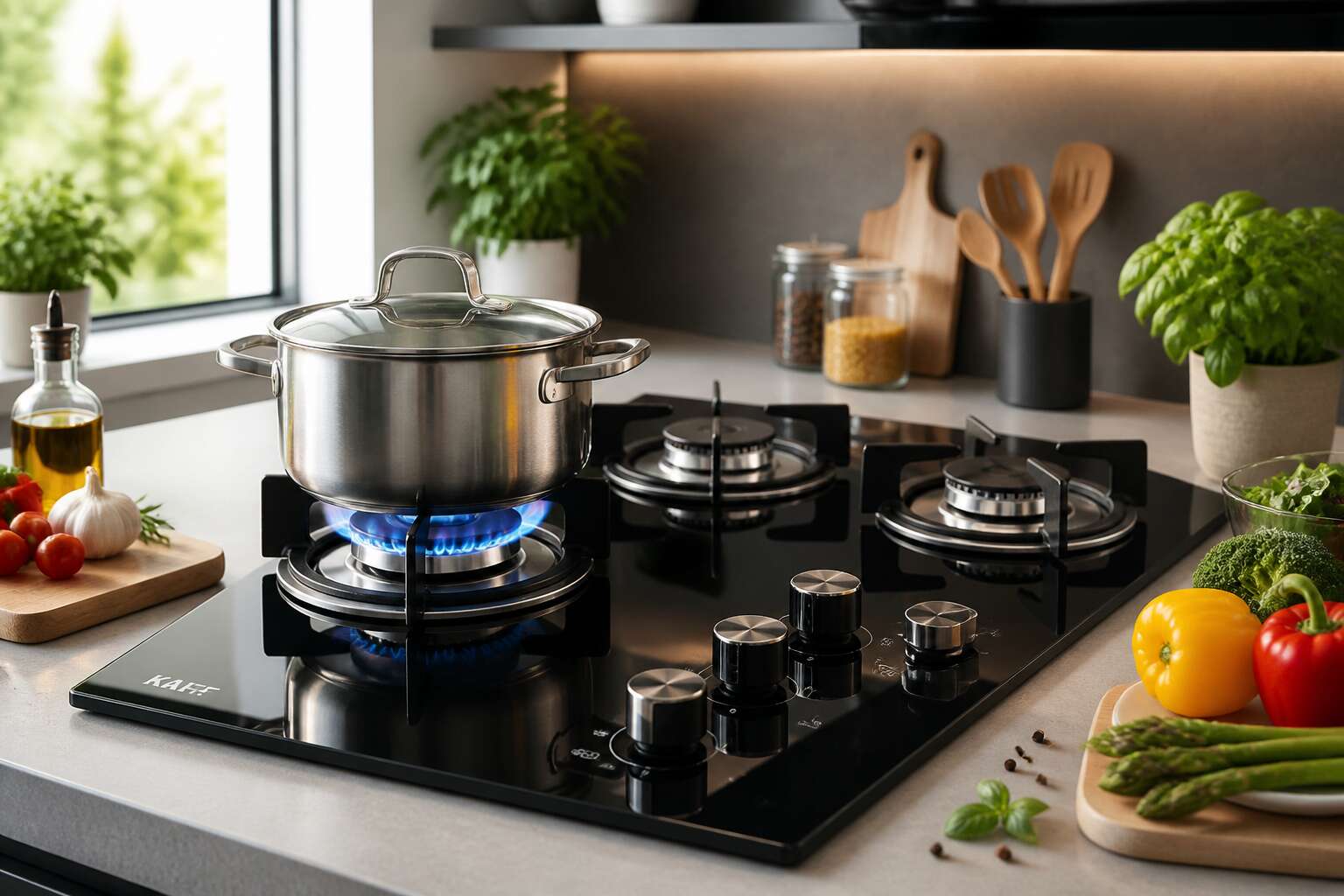
Key Benefits of Glass Surface Stoves
Even Heat Distribution Across Cooking Zones
The true merit of a glass top gas stove reveals itself most clearly when you observe the thermal behavior across the entire cooking surface. Unlike conventional stoves that often concentrate heat directly beneath the pot, the glass surface facilitates a more lateral distribution. This means the outer edges of your frying pan receive their fair share of warmth, which is crucial when you are searing meat or reducing a sauce. The result is a consistent simmer without any frantic stirring to prevent sticking.
This even heat distribution is achieved through the specific arrangement of the burner caps and the reflective nature of the glass ceramic base. The flame’s energy is not only transferred upward but also reflected back, creating a more uniform heating zone.
– A delicate bechamel thickens evenly without scorching at the base.
– A roti puffs up uniformly, indicating the heat reached every quadrant of the tawa.
– Vegetables caramelize at the same rate, producing a consistent texture across the batch.
For the home cook preparing a traditional South African potjiekos, the steady, low-temperature control is a distinct advantage. The forgiving nature of the glass top allows for a precise adjustment of the flame, ensuring the stew bubbles gently rather than boils aggressively. This controlled heat is the difference between a memorable meal and a merely cooked one. When you invest in a quality appliance, the cooking process becomes less about vigilance and more about enjoyment, allowing you to focus on the flavors developing in the pot.
Effortless Cleaning with a Smooth Top
A glass top gas stove turns the worst part of cooking into a minor chore. After a long evening of preparing a hearty bredie, the last thing you want is to wrestle with greasy pan supports and burnt-on drips! With a glass top, a single wipe with a damp cloth usually does the job.
I have found that the absence of crevices makes a real difference. Spills and splatters have nowhere to hide, so there is no need to dismantle anything for a deep clean. Even a stubborn splatter lifts off with a gentle scrape. For daily cooks, this stove makes the weekly routine far less taxing.
- A soft sponge for everyday spills
- A glass scraper for stubborn residue
This ease of maintenance is a quiet luxury.
Modern Aesthetics That Elevate Kitchen Design
I have spent years observing how people inhabit their cooking spaces. Kitchens have become the psyche of the home, yet many South African domestic spaces remain trapped in outdated form. A glass top gas stove alters this equation with an architectural presence that commands attention without shouting.
The reflective surface catches ambient light throughout the day. In Johannesburg mornings, it casts a soft glow across the room. By evening, it mirrors the warmth of dinner preparations. The material grammar of glass and steel transforms an ordinary cooking zone into a deliberate design statement.
Consider what this aesthetic shift delivers:
– Clean sightlines from any angle of the room
– A seamless transition between countertop and appliance
– Perceptual expansion of smaller kitchen spaces
The visual simplicity creates a calm that traditional stovetops cannot match. The chromium finish on the burners adds functional elegance. Every glass top gas stove becomes the quiet centre around which the domestic rhythm revolves.
Durable Construction Resistant to Daily Wear
Over a decade of observing kitchens in high-traffic homes has taught me that durability is rarely about brute force. It is about intelligent material selection. A glass top gas stove with a toughened ceramic surface handles the daily grind of pots being slid across its plane, or a heavy cast-iron skillet landing with more force than intended, without a scratch or a crack. The vitrified surface is engineered to absorb this kind of abuse that would leave enamel or painted steel looking battle-worn.
This resilience stems from the specific ceramic composition. The glass is baked at high temperatures to create a dense, non-porous layer that resists staining from beetroot juice or a splash of red wine. The frame, often a powder-coated steel or stainless steel chassis, prevents the glass from flexing under load. For South African households, where loadshedding might delay a full meal prep, the glass remains unaffected by temperature fluctuations and humidity. It does not rust, chip, or peel.
To understand the layering involved:
– The top sheet is ceran glass, which handles thermal shock
– A bonded metal honeycomb layer dissipates point-load stress
– The burner base is sealed to prevent ingress of liquids or debris
The result is a cooking surface that looks pristine five years after installation. When you consider the price of replacing a cheap gas hob every few years, the initial investment in a superior one makes economic sense. It is a silent, reliable partner for daily cooking demands. We supply the full range with a standard local warranty, so your purchase is always backed by our after-sales support for parts and servicing.
Built-In Safety Features for Peace of Mind
A flame failure device takes only seconds to sever the gas supply when a burner goes out unexpectedly. That response time matters in a busy South African kitchen, where a draught or a boil-over can kill a flame without warning. The thermocouple senses the temperature drop and cuts the gas flow instantly. I have seen this safeguard transform a glass top gas stove from convenience into household protection.
Safety extends beyond the flame itself. The burner caps are recessed to minimise accidental contact with hot components. Many models include a child safety lock on the control knobs, essential for households with curious fingers.
- Flame failure device trips the gas line instantly
- Recessed burner design reduces burn risk
- Child lock prevents unintended ignition
When you choose a glass top gas stove, you are selecting a unit that actively protects against common kitchen accidents. These layered protections work quietly, granting peace of mind without demanding your attention.
Important Maintenance and Cleaning Tips
Daily Wiping Routine for a Streak-Free Finish
The quiet menace of a stained glass top gas stove is that it looks pristine until the light catches it at a certain angle. Smudges and mineral deposits from hard water do not announce themselves; they simply accumulate, dulling the surface finish over time.
A daily wiping routine is your first line of defense. Use a soft, damp microfiber cloth after the stove has cooled enough to touch. Circulate the cloth in overlapping strokes to lift the residue. Follow with a dry section of the cloth to reveal the true depth of the glass. This two-step motion prevents the buildup that turns routine cleaning into a laborious scrubbing session.
For the daily maintenance, consider this simple sequence:
– Always use a dedicated cloth for the glass to avoid picking up grease from other surfaces.
– Wipe in a single direction, then repeat perpendicularly to catch any smears.
– Finish with a buffing motion using light pressure.
Water quality plays a role here. If your area has high lime content, a drop of white vinegar in the water helps to break down the stubborn film. This brief, consistent practice preserves the clarity and ensures your glass top gas stove remains a focal point for years.
Removing Burnt-On Residue Without Damage
Somewhere between the satisfaction of a perfectly seared steak and the quiet dread of the morning after, lies the reality of a working kitchen. The burnt-on residue clinging to your glass top gas stove is not a defect. It is a testament to use, to meals prepared with intention. Left alone, that residue hardens into a stubborn crust that resists simple wiping and risks scratching the tempered glass surface during aggressive scrubbing. The golden rule is patience. Never attack the cooktop while it is hot, as thermal shock can crack the glass. Wait for the surface to be completely cool, then apply a purpose-built ceramic cooktop scraper held at a 45 degree angle to gently lift the carbonized food.
For the more obstinate patches, a paste of bicarbonate of soda and water, left to sit for fifteen minutes, will soften the bond between the char and the glass without the need for abrasive scourers. A plastic spatula or the edge of an old store card works well for this low pressure scraping. The technique matters more than the force applied.
Consider this sequence for a deeply soiled glass top gas stove:
1. Dampen the affected area with warm water to rehydrate the residue.
2. Apply the bicarbonate paste in a thick layer over the burnt spots.
3. Cover with a damp cloth and wait for the paste to dry slightly.
4. Use the scraper to push the softened residue toward the center.
5. Wipe away the remnants with a clean, damp microfiber cloth.
This method protects the integrity of the glass, maintaining the smooth surface that makes the appliance so desirable. The final polish should be done with a dedicated glass ceramic cleaner to restore the luster. Through this careful maintenance, the glass top gas stove continues to reflect the light of the kitchen rather than the shadows of yesterday’s cooking. It is a simple ritual, but it keeps the heart of the home beating with clarity.
Selecting Cleaners That Protect the Surface
The right cleaning agent is as important as the wiping motion itself. A glass top gas stove endures constant thermal cycling, which leaves the surface slightly porous to microscopic debris. Harsh chemicals can etch that surface over time, while oil-based polishes leave a film that discolors during the next cooking session. You want a cleaner that evaporates cleanly and leaves no residue behind.
For everyday maintenance, a simple dilution of white vinegar in distilled water handles most smudges and fingerprints. It cuts through the mineral deposits left by hard South African tap water without attacking the glass sealant. Avoid citrus-based degreasers on the control knobs, as the acid can fade the printed lettering.
Stay clear of any product that contains ammonia or chlorine bleach. These agents weaken the bonds between the ceramic glass and the metal frame beneath it. A dedicated ceramic cooktop cleaner, applied sparingly, is the only product you should trust for the final pass.
Here is a quick guide for selecting products safely:
– pH neutral liquid soaps are safe for daily use.
– Avoid scouring powders, steel wool, and melamine sponges.
– Do not use oven cleaner sprays on the top surface.
– Check the label for the words “ceramic” or “glass cooktop.”
Your relationship with the appliance should be one of mutual respect. The surface gives you a flawless cooking zone, and in return, you feed it only the gentlest of companions. The right cleaner is a quiet promise that the glass will remain clear for the next meal, the next season, and the next decade of family suppers. Your glass top gas stove deserves no less than this careful consideration.
Preventing Scratches and Chips During Use
Here is a fact that will make you wince: one grain of rice can scratch a glass top gas stove more effectively than a butter knife. Every stray particle from your pantry turns into grinding paste the moment you slide a pot across the surface. That explains the mysterious hairline scratches you discover after dinner.
The culprit is pushing, not lifting, and on a glass top gas stove this habit leaves permanent reminders. Your grandmother’s habit of shuffling cast iron across the stovetop is an inheritance you should politely refuse. A chip arrives with a loud clunk from a dropped lid, and a chip is not cosmetic. It is a stress point that can spider-web into a crack during the next heating cycle.
- Lifting every pot, no matter the size, becomes second nature.
- Checking pot bases for embedded grit takes two seconds.
- Keeping heavy lids away from the edge prevents the clunk.
When to Schedule Professional Servicing
Some residue, like a stained halo around the burners, defies your standard spray. This occurs when trapped oils polymerize into a film that bonds with the glass surface. A weekly paste of bicarbonate of soda and warm water breaks that bond without introducing abrasive scratches. Leave the paste in place for several minutes, then wipe with a damp microfibre cloth. Dried-on starch or sugary spills require a different approach. Place a damp towel over the affected zone for five minutes to rehydrate the glaze, then scrape gently with a razor blade held at a low angle. Any glass top gas stove benefits from this controlled intervention before soiling becomes permanent.
The burners themselves seldom need deep maintenance, but the ports do. Blocked gas ports produce a yellow, lazy flame instead of a crisp blue one. Clean the caps and heads with a small wire brush once a quarter. Ignition problems, however, indicate a system fault, not a dirt problem. If you push the ignition repeatedly without a spark, the electrode may be cracked or the wiring may be faulty. This is the moment to call a professional.
When to schedule professional servicing? Do it annually, ideally before winter usage increases. A certified technician will inspect the gas regulator, check for leakages at every joint, and test the ignition safety devices. In South Africa, a gas compliance certificate is legally required upon installation and after any repair. If you smell gas at any time, skip the DIY fix and book a professional immediately. A faulty regulator or a corroded injector affects flame spread across all burners, making your glass top gas stove unreliable and wasteful. Professional checks also cover the internal seal, which protects your oven cavity from moisture. Your stove is a gas appliance with a glass surface; the glass does not make the gas safe. It only makes it beautiful. Trust the signature of a licensed artisan on the gas line, not the shine of the countertop. Regular care keeps the surface pristine, but professional oversight keeps the flame honest.
Safety Considerations for Households
Child Safety Features That Offer Extra Protection
The kitchen is the most dangerous room for children under five, and a glass top gas stove sits at the center of that risk. Its sleek profile hides a painful truth: the glass holds heat long after the flames die.
Gas adds the obvious hazard of exposed fire, while the glass top introduces an invisible one. Young children cannot see the lingering heat, so it looks safe moments after use. Knob guards keep small fingers from the burners. Turning pot handles toward the rear prevents accidents!
Extra layers of protection:
- Child resistant knob covers that need two hands to operate
- Burner lockout settings that disable the entire cooktop
- Guard rails that keep pots anchored in place
No device replaces an attentive adult, but I have seen these additions offer crucial seconds at dinner. A glass top gas stove remains a worthy centerpiece when the household treats it with due caution.
Gas Leak Prevention and Regular Inspections
A gas leak rarely announces itself. It lingers until a spark turns the kitchen into an ignition chamber. The soapy water test catches small leaks at the hose connection. Bubbles mean trouble.
South African households face specific risks. Hard water corrodes fittings faster than expected. The hose connecting the glass top gas stove to the supply line needs a yearly check. Utensils stacked against the tube create pressure points.
- A hissing sound near the regulator signals a pressurised leak
- Yellow flames while cooking means incomplete combustion
Smell gas but find nothing? Turn off the main valve and call a certified technician. The glass top gas stove hides internal piping, so visual checks miss what lies beneath. Annual inspection keeps the burner assembly and gas valve sealed. The scent fades, but the gas does not.
Handling Spills and Overflows Effectively
The average South African kitchen sees more drama over a bubbling pot than a telenovela, yet the aftermath of a spill is where genuine peril begins. A rolling boil on a glass top gas stove creates a deceptive mess; the liquid hits the hot surface and vaporises into steam, carrying sugar and starch into every crevice of the burner assembly. This is not merely a cleaning nuisance. When the residue cools, it hardens into a cement-like layer that blocks the tiny gas ports, altering the flame pattern. The result is a lazy, orange flame that coats your cookware in soot rather than heating it efficiently.
Water is your first responder, but only in moderation. When a pot overflows, do not douse the hob with a cascade of cold water while the burners are active. The thermal shock can crack the ceramic glass, leading to a costly replacement. Instead, switch off the flame and let the cooktop cool for a few minutes. Then, blot the excess moisture with a cloth before addressing the residual stickiness.
For the stubborn remnants of a sugary spill, consider the following:
1. Apply a damp cloth soaked in warm water and lay it over the affected burner cap.
2. Wait ten minutes to soften the crust.
3. Lift the cap and clean the base with a non-abrasive sponge.
4. Dry every component thoroughly before relighting to prevent moisture from corroding the gas valve.
The true danger lies in silence. A small overflow that seeps beneath the burner cap might not extinguish the flame immediately, but it can produce a faint odour of burnt sugar that masks the scent of gas. Pet owners in Johannesburg and Cape Town often dismiss this as cooking aroma, but the residue continues to heat and decompose with each use. Over months, this carbon build-up compromises the ignition system, forcing you to click the knob multiple times before the flame catches. That delay releases an unignited puff of gas into the air. Every extra click is a roll of the dice.
A glass top gas stove demands a particular etiquette. Spills are inevitable, but the effective household treats them with the urgency of a minor emergency. The moment the pot boils over, the cooking session should pause. Leaving the mess to cool means the sugars caramelise, and caramelised sugar is a stubborn adhesive that resists ordinary detergents. The cleaning ritual must be immediate yet patient. The payoff is a hob that ignites on the first turn, every time. The alternative is a slow, silent erosion of the appliance’s reliability, one missed bubble of moisture at a time, culminating in a repair bill that stings more than any burnt finger.
Proper Ventilation for Clean Indoor Air
A closed kitchen with a burning gas flame changes the air you breathe within minutes. Most South African homes have no extractor fan at all, leaving a glass top gas stove to share oxygen with the household. Each hour of gas cooking produces combustion byproducts, including carbon monoxide and nitrogen dioxide, even when the flame appears healthy. In urban dwellings where windows stay shut for security, these gases accumulate at head height.
Carbon monoxide is odourless. The human nose detects natural gas at roughly one part per million, but this byproduct offers no warning. An extractor that vents outside makes a measurable difference. Recirculating filters trap grease, not gas.
- Confirm burner flames burn blue, not yellow, to verify complete combustion.
- Open a window on the opposite side of the kitchen to create cross ventilation.
- Keep the area around the stove clear to maintain airflow.
Ventilation determines whether your glass top gas stove remains a safe appliance in a sealed domestic environment.
Using the Right Cookware to Match Burner Sizes
Matching your cookware to the correct burner size is a quieter safety practice, yet it protects the glass surface from stress. A small pot on a large flame creates hot spots that radiate outward, heating areas where no pan rests. The glass absorbs that stray energy, and over time, the thermal shock can weaken the structure. A glass top gas stove deserves pans that cover the flame entirely, keeping direct heat where it belongs.
An oversized pot on a small burner produces the opposite problem. The flame licks up the sides of the vessel, scorching handles and wasting gas. That escaping heat also travels across the glass, leaving discolouration and potential burn hazards for anyone reaching across the stove.
- Check that the pot base sits flat against the burner grate.
- Choose a burner that matches the pan diameter, not the cooking speed you want.
- Lift pots instead of sliding them to avoid grinding debris into the glass.
This alignment between cookware and burner keeps temperatures contained. It preserves the finish of the glass top, reduces unnecessary gas consumption, and prevents the kind of accidents that occur when heat escapes its intended path. Household safety starts with this simple pairing, long before a flame is even lit.
How to Select the Right Model for Your Kitchen
Measuring Your Countertop Space Accurately
Selecting the right model for your kitchen begins with a tape measure, not a brochure. The countertop depth dictates which glass top gas stove fits, and a South African standard counter runs 600mm deep, though stone surfaces often vary by 10 to 20mm.
Start with the cutout width, then verify the clearance from the front edge to the back splash. Account for these measurements:
- The overhang beyond the burner box on each side
- The gap between the stove and adjacent cabinetry
- The height from the countertop to the range hood
I have watched buyers assume a 60cm opening fits a 60cm unit. The glass top gas stove usually requires extra allowance for its metal rim and internal components. The actual opening rarely matches the visual space.
Understanding Burner Power and Configuration
Here is where the tape measure stops earning its keep and your inner chef starts meddling. A glass top gas stove with four identical burners looks symmetrical in the showroom, but in your kitchen it will betray you. Burner power dictates whether you simmer a pot of chakalaka without scorching it or boil pasta water in reasonable time. Configuration matters more than the burner count.
Consider your cooking habits before you commit:
- A high output burner of 3kW or more for searing meat and wok tossing
- A low output burner below 1.5kW for gentle sauces and melting chocolate
- Intermediate burners spaced so large pots do not crowd each other
Most South African models place the power burner at the front left. That works well for right handed cooks who reach across with their dominant hand. A glass top gas stove with rear mounted power burners forces you to lean over hot surfaces, which is unpleasant and unsafe. Check the wok cradle too, because a flimsy one buckles under a heavy cast iron pot. That is the kind of failure no amount of cleaning polish will fix.
Evaluating Advanced Features Like Auto-Ignition
Most homeowners in South Africa replace a stove only when the old one fails, which means your next purchase will likely serve you for a decade or more. That reality makes the selection process more consequential than a quick showroom browse.
The ignition system is the first feature to scrutinize. A glass top gas stove with electric ignition requires a power source to spark the burner. During load shedding, a manual lighter becomes your backup. Some models feature battery powered igniters which solve this entirely. The batteries typically last for months, and the convenience outweighs the occasional replacement.
When evaluating auto-ignition, consider the failure points:
– The spark module placement. Units mounted under the hob are vulnerable to grease and moisture accumulation.
– The number of ignition electrodes. One shared electrode for all burners is common, but individual electrodes per burner provide more reliable starting.
– The quality of the spark. A strong, immediate spark indicates a robust transformer. Weak sparks that repeatedly click before lighting are a sign of a substandard component.
A benefit of auto-ignition goes beyond convenience. Each successful ignition prevents gas from escaping unburned into your kitchen, which is safer and more economical. I have used stoves where the ignition required holding the knob for several seconds, and those few seconds felt eternal. Newer models ignite instantly, which is the standard you should demand.
The electrical connection for the ignition also influences installation. Some household kitchens in older suburbs do not have a dedicated socket near the stove position. Confirm that your electrician can run a line to the appliance footprint before you finalize the purchase. A glass top gas stove that cannot spark during an outage or due to electrical issues becomes a frustrating novelty. Select a model with a proven ignition system and your daily cooking flow will remain unbroken.
Balancing Your Budget with Desired Specifications
The procurement friction starts when you reconcile what you want against what your wallet allows. That moment of negotiation, where you examine the surface of your counter-tops and the depth of your savings, is where the real decision happens. You will strip away the marketing gloss and evaluate the raw specifications. The permanent nature of this purchase makes the scrutiny worthwhile.
Your household has unique variables. The size of your family dictates the number of burners you need. The cooking style, whether you are searing on a weeknight or simmering a pot of stew, alters the requirement for power.
– The fuel source: confirm your cylinder placement and the compatibility of the connection with the new unit.
– The counter-top dimensions: the cut-out must align with the new installation, preventing stress fractures under the glass.
The price spectrum for a glass top gas stove is vast. The cheapest model offers the basic function of combustion. The premium unit adds a refined valve system that gives you precise flame control and a hardened glass that withstands thermal shock. You pay for this resilience, and in the South African climate, that durability is not a luxury. It is a necessity.
Reading Reviews and Ratings from Real Users
A spec sheet cannot tell you how a glass top gas stove behaves on a cold Highveld morning. The marketing photos show perfect flames, but they do not show how the glass holds up when a pot boils over. Real user reviews fill that gap.
Real user reviews reveal the quirks that testing labs miss. Focus on long-term ownership, not first-week excitement. Look for comments on:
- Flame stability on the lowest setting
- Glass temperature around the burners
- Knob responsiveness after six months
South African kitchens vary from coastal to inland. A glass top gas stove that performs in Cape Town’s humidity may react differently in Johannesburg’s dry air. Weigh the local voices in the ratings. That is where the truth about daily use lives.
Checking Warranty and After-Sales Support Options
Selecting the right model starts with the warranty, not the flame pattern. A glass top gas stove with a two year local warranty outperforms an imported unit with vague promises. Ask the supplier where spares are held. If the answer is overseas, prepare for long waits.
Call the after sales line before buying. See how quickly someone answers. Ask about call out fees, labour coverage and replacement glass availability. In South Africa, support varies wildly between provinces.
– Local technicians certified for gas installation
– Stock availability for burner parts and thermocouples
– Clear policy on glass damage claims
The cheapest glass top gas stove becomes costly when the only technician is hundreds of kilometres away. Choose a brand with boots on the ground, not just a website.
Comparing Glass Surface Cooktops to Other Alternatives
Gas vs Electric Coil: Efficiency and Response
Electric coils lag when you need instant heat changes. A glass top gas stove delivers flame response that electric elements cannot match. I have watched chefs in Johannesburg restaurants switch between simmer and sear in seconds, something coil burners handle clumsily.
Efficiency involves trade-offs. Electric coils lose energy heating the air around them. Gas directs heat straight into the pot, but it also warms the kitchen, which matters in Durban summers.
Consider your priorities:
– Flame control for quick temperature adjustments
– Lower running costs with piped gas
– Visual confirmation of heat levels
Electric coils cool slowly and leave hot spots. The glass top gas stove provides the tactile, immediate feedback that makes cooking feel intuitive.
Gas vs Induction: Cooking Experience and Energy Use
The heart of the matter lies in control and consequence. A glass top gas stove offers a tactile connection to the heat source, a real-time dialogue between your hand and the flame. Induction, by contrast, relies on magnetic precision; it is undeniably fast, yet it can feel clinical, almost detached. The immediate response of induction is impressive, but the constant pulsing of energy can feel sterile compared to the raw, physical feedback of gas.
Your choice also depends on the reliability of your energy supply. In South Africa, this is a significant consideration. The performance of an induction hob vanishes entirely during load shedding, while a glass top gas stove remains a stalwart ally when the grid fails. Here is a basic breakdown of the energy reality:
- Induction offers superior efficiency, converting up to 90% of energy into heat, but it is useless without a stable electricity supply.
- Gas is less efficient, but it provides consistent, independent cooking power, a crucial trait for many households.
The cost of electricity per kilowatt-hour continues to climb. This makes the lower running cost of piped gas for high-heat tasks an attractive proposition for the budget-conscious cook. While induction excels at rapid boiling, the glass top gas stove excels at the nuanced, low-heat techniques that draw out flavour. That slow simmer, the deliberate reduction of a sauce, is where gas truly earns its place in the kitchen.
Glass vs Stainless Steel: Maintenance and Looks
A glass top gas stove presents a visual permanence. The surface is a single, seamless plane of dark ceramic, a bold counterpoint to the brushed metal of most other appliances. Stainless steel, while professional in its sheen, acts as a relentless mirror. It reveals every smudge, every droplet of water, and the faintest ghost of a fingerprint, demanding constant attention.
The true divergence appears in daily maintenance. Glass offers a smooth landscape where spills evaporate into a thin residue that wipes away with the edge of a cloth. Steel, by contrast, intricately textures its surface with fine grain lines, giving grime a foothold. That brushed finish helps hide scratches, but it also holds onto grease and discolouration when exposed to high heat. Consider how these two materials respond to time:
– The glass surface will show fine scratches from granulated cleaners, though its dark colour masks them effectively.
– The steel surface resists shattering but can show bulges or a bluish tint after intense heat exposure.
– Glass needs a dedicated cleaner to avoid streaks; steel often reacts poorly to abrasive scrubbing pads.
Physically, the glass top relies on its rigidity to support the cast iron grates of the gas burner. Steel is more forgiving of impacts. Yet, the glass surface offers a tactile sensation of solidity and weight that a thin steel sheet lacks. For a home where the kitchen is a stage, glass provides the drama of the flame against a black canvas. Steel provides the utilitarian silence of a butcher block. The choice is a question of how much you wish to see your own work reflected back at you.
Long-Term Cost Differences Across Cooktop Types
Purchasing a glass top gas stove is not the final expense, merely the first. Over a decade, the cost differences between cooktop types become stark. Gas burners on a glass surface deliver heat with a lower per-unit fuel cost than electric coils in most South African municipalities, especially during load shedding. Yet the glass itself is a variable. A single impact crack means a full surface replacement, a cost rarely associated with steel alternatives.
- Gas refills versus electricity tariffs.
- Glass cleaner and soft cloths versus abrasive pads for steel.
- Professional servicing for gas valves versus element replacements for electric coils.
Induction offers a different trade-off, with high efficiency but a requirement for magnetic cookware. I have seen owners replace glass tops after a single dropped pot. The glass top gas stove sits between, offering fuel savings with a surface that demands respect. Over five years, the total ownership may still favour gas, provided you treat the top accordingly!


0 Comments