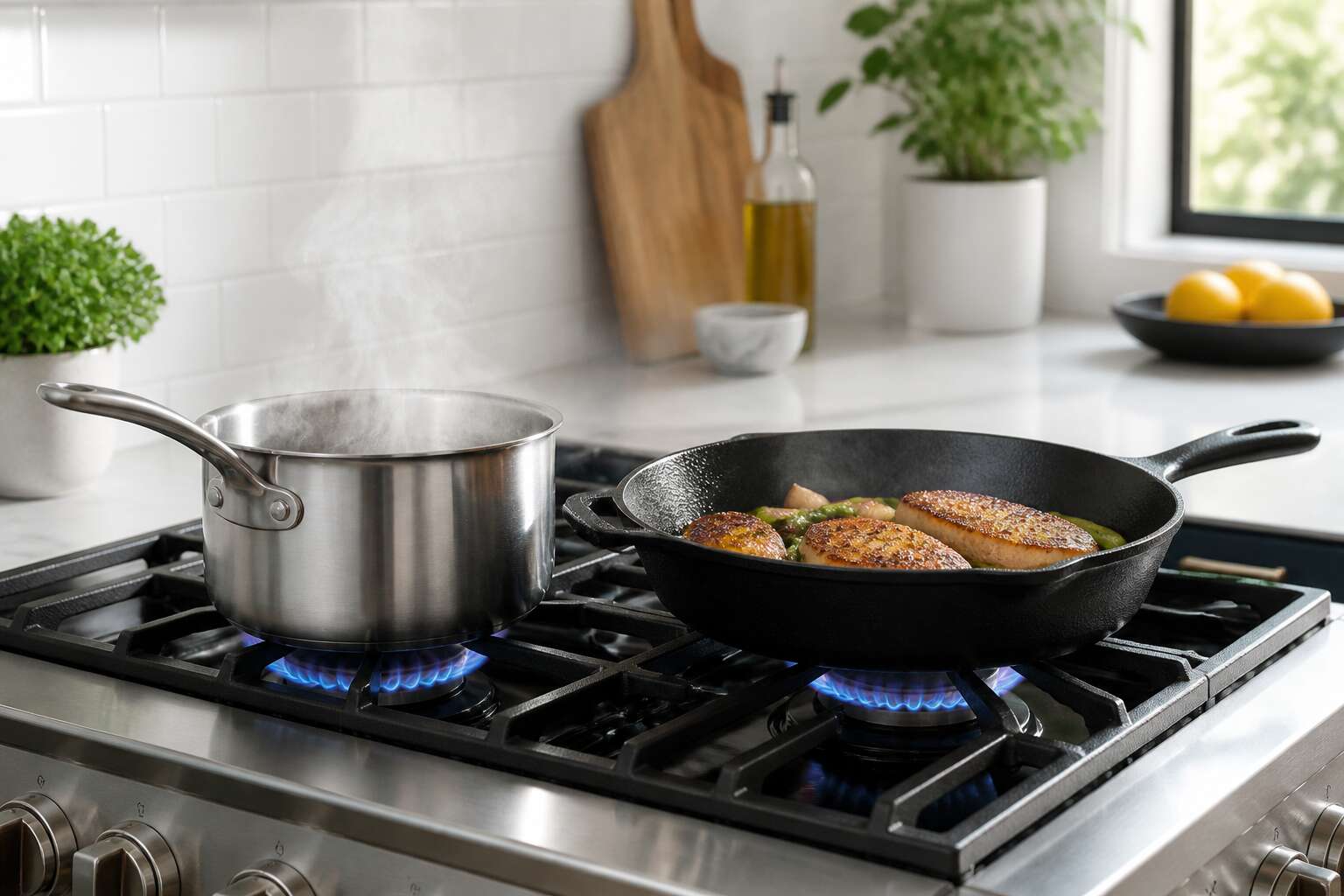
Materials That Perform Best on Open Flames
Choosing the right pots and pans for gas stove cooking often begins with a simple truth: fire behaves differently than electric coils. A gas flame licks the base with an aggressive, immediate heat that demands a certain kind of metal. Thin aluminium will warp and scorch the moment you look away. Honestly, it is a recipe for frustration.
Your best allies are materials with density and a natural affinity for high temperatures. Stainless steel with a heavy, encapsulated base provides excellent durability, though it requires a watchful eye. For precise control, many home cooks swear by carbon steel, a material that heats quickly and responds instantly to a flick of the knob. You might consider these core options:
- Cast iron for intense, even searing of steaks and chops
- Carbon steel pans for rapid temperature changes and wok cooking
- Tri-ply stainless steel for everyday versatility without warping
Cast iron remains the unshakeable workhorse for open flames. It holds heat like a bank vault, giving you that beautiful, golden crust on a fillet. Just keep the flame moderate; a roaring blaze is unnecessary. Placing a cold pan on a high flame is a sure path to a ruined meal, so always allow the metal to warm gradually. A well-seasoned surface produces a natural non-stick effect, which is far safer than chemical coatings that can degrade under direct fire.
When selecting your set, feel the weight of the pan. A heavier base means more even heat distribution. Your pots and pans for gas stove should feel stable and substantial in your hand. That quiet confidence, that sense of balance, is what separates a pleasant dinner from a chore. The fire will do its part with a little patience and the right metal beneath you.
Key Design Features for Gas Cooktop Compatibility
Gas cooktops in South African kitchens deliver raw, immediate heat that electric plates simply cannot replicate. That force demands cookware built to handle sudden temperature surges without warping or scorching your dinner. When selecting pots and pans for gas stove use, the physical construction matters more than the brand name stamped on the base.
The most critical feature is a thick, flat bottom. Gas flames lick the underside unevenly, so a thin base creates hot spots that burn food in one corner while leaving the rest undercooked. Look for multi-ply bases, preferably aluminium or copper cores sandwiched between stainless steel layers. These metals distribute heat laterally across the entire surface. Cast iron also performs admirably, though its weight can be cumbersome for daily flipping and tossing.
– Stable handles that remain cool during extended simmering
– Tight-fitting lids to trap moisture and flavour
– A wide cooking surface to accommodate larger flame patterns
The base-to-wall transition is another overlooked element. Gas flames climb up the sides of your cookware, so a gentle curve where the bottom meets the wall prevents heat from concentrating at a single point. This curvature also makes stirring easier and cleaning less tedious. Pots and pans for gas stove cooking with flared rims offer better pouring control, while straight-sided designs maximise volume for braising.
Finally, consider the material’s response to flame adjustment. Gas allows instant temperature changes, but only responsive cookware can keep pace. Copper and aluminium react within seconds, giving you precise control over delicate sauces. Stainless steel alone lags behind, which explains why most professional-grade pots and pans for gas stove setups feature clad construction. The layered metals work together, balancing responsiveness with durability.
Choosing Between Cookware Sets and Individual Pieces
In South African kitchens, the gas stove has become the undisputed heart of the home, offering a level of control that electric coils simply cannot match. This precision demands a certain dedication from your cookware, forcing a decision that every home chef must face. Do you invest in a complete, gleaming set, or do you carefully curate your collection piece by piece?
The allure of a full set is undeniable, a promise of visual harmony and immediate readiness. Yet, the reality of cooking on gas often tells a different story. A mismatched collection of individual pieces allows you to select the exact material and weight for each specific task, from a lightweight saucepan for sauces to a heavy cast iron griddle for searing.
Here is what to consider when you stand at this culinary crossroads:
– Your existing cooking habits and what meals you prepare most often.
– The physical storage space in your kitchen, as sets can be bulky.
– Your budget for a one-time purchase versus a gradual investment.
– The specific heat distribution required for your favourite recipes.
Ultimately, the best pots and pans for gas stove are the ones that feel right in your hand. A curated collection reflects a personal journey through cuisine, while a matching set offers a clean, cohesive aesthetic. For the home cook who treasures control, the choice is not about uniformity, but about the intimate relationship between flame, metal, and the craft of cooking itself.
Caring for Cookware on a Gas Stove
A gas flame is a forge, a raw and immediate heat source that demands respect from your cookware. Unlike electric coils, the fire licks the metal directly, creating hotspots that can warp a poorly made pan within a single season of use. I have seen beautiful copper pots develop a permanent wobble because someone left them on a high flame with nothing inside. The metal needs a moment to acclimatise, to stretch and expand evenly.
Proper care begins with the foundation. Before you even place a pot on the burner, consider the base. A thick, multi-ply disc is your best friend here, as it disperses the fire’s fury. Furthermore, you must manage the flame itself. It should never lick up the sides of the vessel; that is wasted energy that scorches handles and leaves stubborn, carbonised marks that no scrubber will ever fully remove.
– Always match the pan base size to the burner size.
– Preheat slowly on a medium setting before cranking the heat.
– Wipe the exterior dry before cooking to prevent staining.
Your pots and pans for gas stove will accumulate soot and residue over time, a natural byproduct of the combustion process. A gentle cleaner and a soft cloth are all you need to maintain their lustre. And when you do cook, remember that a gas stove gives you the unique gift of instant control, but the metal still holds the memory of the heat. Let it cool down gradually on the turned-off burner to prevent the base from buckling, ensuring your faithful tools remain true for years of culinary crafting.
Top Buying Considerations for Gas Cookware
In every kitchen with an open flame, the cookware determines how heat behaves. The right pots and pans for gas stove respond instantly when you adjust the dial. Gas flames need a flat, thick base to spread heat evenly across the surface.
Look for multi-ply construction with an aluminium core. This prevents scorching and gives you control for searing and simmering. Cast iron also works well because it holds temperature steady.
Consider these factors when choosing:
- Flat bottoms that sit flush on the grate.
- Oven-safe handles for stove to oven transfers.
- Handle length that keeps your knuckles clear of the flame.
Weight matters too. A heavier pan feels stable but should allow a confident toss. Before you buy pots and pans for gas stove, hold the handle. Feel the balance. Your flame deserves a partner that listens to every turn of the knob.


0 Comments