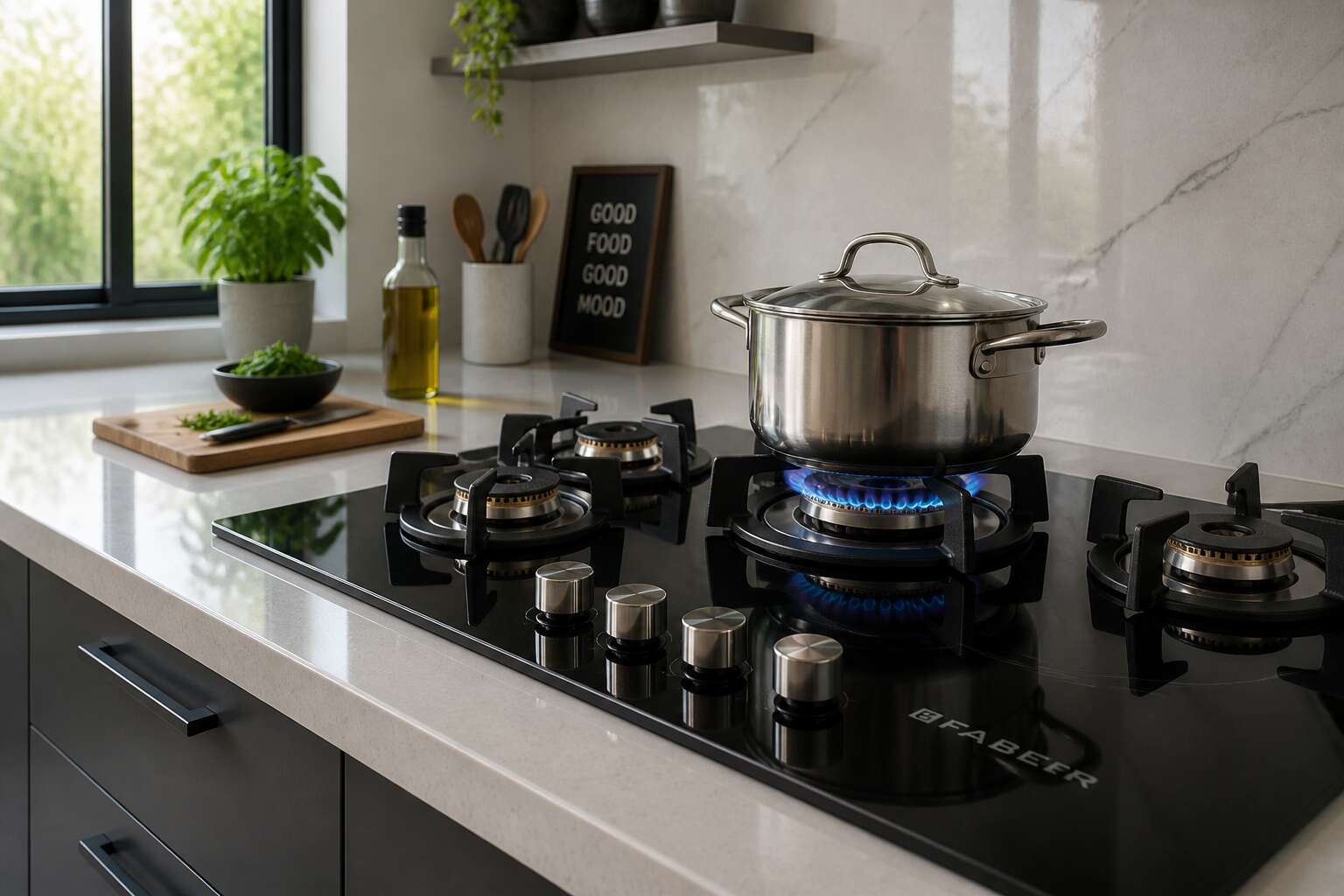
Why Choose a Glass-Top Gas Range
Modern Aesthetics and Kitchen Appeal
The most photographed spot in a modern kitchen is often the stove, yet most stoves do not deserve that attention. A gas stove with glass top changes that. In South African homes, where natural light is abundant, the surface reflects the sun and matches the colours of surrounding cabinetry without clutter. This is not luxury for its own sake. It is a practical way to make the kitchen feel larger and more intentional.
The seamless top also creates a consistent texture across the counter, which helps the whole space look cohesive. For those who entertain often, I have noticed that the appliance becomes a quiet point of interest. The aesthetic benefit appears immediately and continues to perform under daily use!
Even Heat Distribution and Cooking Performance
Even distribution of heat remains the quiet promise of a gas stove with glass top. The flame spreads across the burner, while the tempered surface holds that warmth steady, so your pot simmers without hot spots! I have watched a delicate sauce behave differently on this surface, more predictably, as if the glass were acting as a level plane.
The glass top reflects the heat upward, not sideways, meaning the sides of your pan receive the same attention as the centre. For bread, for slow stews, this is the difference between a crust and a scar. Such precision builds a confidence in the kitchen that is hard to name but easy to taste. When you choose a gas stove with glass top, you are not guessing about the heat; you are counting on it.
Easy-to-Clean Surface Compared to Traditional Grates
It is a truth universally acknowledged, that a family in possession of a good meal, must be in want of a simple cleanup. The aftermath of a rich, slow-cooked curry often involves a archaeological dig across the cooktop. Traditional steel grates collect every spill and scorch mark, demanding a soak and a scrub that tests your patience. Weighing up a gas stove with glass top often comes down to this moment of truth, the post-dinner chaos. You are not just buying a cooking appliance; you are negotiating a peace treaty with your future self and your dishcloth.
The surface of a glass top is a blank slate. A quick wipe with a damp cloth handles most splatters. The design eliminates the crevices and corners that trap burnt fat and rogue spices. That hidden valley where the wok ring meets the frame, the usual graveyard for spilled stock, is gone.
- Glass surfaces offer a smooth, level area to simplify wiping.
- Traditional grates require individual removal and scraping.
- A flat top resists stubborn staining from high-heat spills.
This is the practical advantage that turns a necessary chore into a formality. When the culinary experiment ends in a minor explosion of bubbling sauce, the recovery time is measured in seconds, not minutes. For the cook who values their leisure time as much as their sear marks, this type of range presents a compelling argument. The choice for a gas stove with glass top is often a choice for a quieter, more controlled end to the evening meal.
Durability and Scratch Resistance
Durability in a gas stove with glass top often surprises the skeptics. I have watched a cast iron pot slam onto a heated ceramic surface without a crack! The manufacturing process matters. These tops use a tempered glass composite that handles thermal shock better than standard kitchen tiles. They do have a vulnerability list, though. This matters.
- Do not drag rough-bottomed pans; lift them.
- Keep gritty debris off the surface between uses.
- Use cleaners made for ceramic tops, not abrasive powders.
The scratch resistance is respectable but not absolute. A stray grain of sand can etch a permanent line under a heavy skillet. But with ordinary care, the surface maintains its clarity for years. That is a practical advantage over painted steel, which chips and rusts. For the South African kitchen, where load shedding can cause erratic cooking temperatures, this reliability earns its place. That same gas stove with glass top, when treated with a little awareness, becomes a long term investment rather than a temporary convenience.
Key Features to Look For in a Glass Gas Cooktop
Safety Features Like Flame Failure and Child Locks
In South Africa, load shedding disrupts routines, so safety matters. A gas stove with glass top offers peace of mind through mechanisms that act before you notice. The flame failure device, a thermocouple, cuts the gas supply instantly if the flame dies. That prevents silent leaks.
Child locks are essential. They stop little hands from igniting burners. Consider these protections:
- Flame failure detection that halts gas flow
- Control knob locks for young children
- Overheating sensors that trigger alerts
I appreciate these details. They make the appliance safe. Honestly, the automatic gas shutoff is a relief!
Burner Configuration and Power Levels
A gas stove with glass top can have two to five burners, but the layout matters more than the count. A triple ring burner provides intense heat across a wide pan base, while a small auxiliary burner handles gentle simmering. I always check the pan support spacing too, because narrow grates wobble with heavy cast iron.
- A high output burner above 4 kW
- A low output burner below 1 kW
- At least two middle range burners
Power levels matter. That high output burner reaches a rolling boil quickly, useful during load shedding when you want to finish cooking before the lights leave. Yet the low burner maintains a stable melt for sauces without scorching. Gas consumption differs. Powerful cooktops use more gas, so match the burner output to your typical meals. On this gas stove with glass top, I find a flexible arrangement beats a single massive flame.
Frame vs. Frameless Edges
Some kitchens hide their secrets well. Others, like a gas stove with glass top, reveal them in the first glance. The frame is where the conversation begins. A framed edge offers a trim, metallic boundary that sits flush against the countertop. It creates a distinct line, a defined moment where the cooktop ends and the surface begins. This design protects the glass edges from chipping during installation or heavy use.
A frameless edge removes that barrier entirely. The glass becomes the surface, flush with the countertop, creating a seamless flow. It feels modern, almost architectural. The risk here is a requirement, the countertop must be perfectly level. Any deviation leaves a visible gap that collects dust and crumbs.
Here is the practical breakdown:
– A framed edge hides minor installation errors and countertop imperfections.
– A frameless edge requires precise cutting and a flawless finish for a seamless glass appearance.
– Framed edges are often stronger at the corners, resisting impact better than their frameless counterparts.
The choice often comes down to your tolerance for imperfection. Frameless edges reward a perfect kitchen with a stunning, continuous line. Framed edges offer a forgiving, robust solution. I prefer the framed variety for its practicality. It absorbs the small shocks of daily life without complaint, and it does not demand a flawless foundation. The glass on a gas stove with glass top is a statement, but the frame is the support system. Both create a different character in the room, one bold and unyielding, the other quiet and resilient. The decision rests on the soul of your kitchen.
Wok Ring and Griddle Accessories
Every gas stove with glass top eventually meets its wok ring. The accessory either elevates your stir fry or slides across the cooktop. Stability matters first. A ring with rubber feet or a weighted base will stay put when you toss vegetables at high speed. The material matters too. Cast iron distributes heat evenly, while thin steel creates hot spots.
For griddle accessories, look for a lip that catches grease and a surface that doesn’t warp. These features are often ignored until the first messy pancake flip.
- Non-slip bottom to protect the glass from scratches.
- Compatible with power burners, not just the tiny ones.
Test the fit before buying. A wok ring that wobbles will test your patience and your wrist. Choose accessories that match the burner layout, otherwise you will use them once and hide them in a cupboard.
Smart Controls and Digital Displays
Loadshedding changes what South Africans expect from digital displays. A gas stove with glass top should retain its timer settings when the power returns. Smart controls that reset to default after every outage become a nuisance.
Look for displays that remain legible under bright kitchen lights. Some touch panels require a deliberate press, which matters when your hands are oily.
- Tactile response or audible confirmation on touch
- Battery backup for the clock and ignition
- Local after-sales support for firmware or repairs
More electronics means more failure points. Choose a brand that services these features in South Africa. A smart stove should simplify your evening, not complicate it.
Warranty and Brand Reliability
Warranty documents reward careful reading. A gas stove with glass top often separates its glass warranty from its gas components. Thermal shock claims get rejected when a chip preceded the crack, so confirm whether the glass surface is covered for both manufacturing defects and cooking stress.
Reliability extends beyond the unit itself. A brand with a strong South African presence stocks spare parts and employs trained technicians. Imported models with exclusive distribution channels leave you waiting months for a simple thermocouple replacement.
- Warranty length on burners compared to the glass top
- Availability of certified service partners in your province
- Labour cost coverage during the warranty period
- History of honouring glass replacement claims
Ask retailers directly about their service record. I always probe for real repair turnaround times. A gas stove with glass top is an investment in daily rituals, and the brand’s after-sales service determines whether that investment pays off.
Cleaning and Maintenance Tips for Glass-Top Gas Stoves
Daily Wiping and the Right Cleaning Agents
A glass surface holds a mirror to your cooking habits, and that reflection fades when residue lingers. Daily wiping, done with a soft microfiber cloth and warm water, prevents stubborn buildup from becoming a permanent fixture. The right cleaning agents matter more than effort; aggressive scourers will etch the ceramic layer, while dedicated glass hob cleaners dissolve grease without abrasive punishment.
For burnt-on splatters, apply the cleaner and let it work for several minutes before gentle circular motions.
– First, wipe away loose debris with a damp cloth.
– Second, spray the appropriate cleaner evenly.
– Third, buff dry for a streak-free finish.
A gas stove with glass top rewards this routine with years of clarity and reliable performance.
Removing Burnt-On Food and Stains
Burnt-on food on a glass surface can seem permanent, but it responds to patience. The residual heat from the burners works to your advantage here. Loose ash and char should be lifted first to prevent scratching the surface during deeper cleaning.
For carbonised spills, a poultice approach delivers results. Dampen a paper towel and lay it over the affected area. This softens the film after a few minutes. Ordinary baking soda becomes a mild abrasive when turned into a paste, which tackles stubborn rings without harming the underlying ceramic.
– Gently scrape softened residue with a dedicated glass hob scraper held at a low angle.
– Apply a paste of baking soda and water for discoloured patches.
– Remove all residue with a clean, damp cloth before buffing.
The glass surface on a gas stove with glass top remains clear when these stains are addressed soon after cooking. Cured and hardened spots demand repeated effort, so early attention protects the finish. A glass stove with glass top continues to look pristine when regular care matches the cooking intensity.
Avoiding Scratches and Damage
Scratches on a gas stove with glass top often come from careless handling rather than normal cooking. A single grain of sand trapped under a pan can gouge the surface. Check the underside of cookware before use, especially cast iron and enamel pots that may carry grit from storage. The ceramic layer withstands heat but not shock. Dropping a heavy lid or tapping the edge with a metal spoon can create microcracks.
- Lift pans instead of sliding them across the glass.
- Keep the burner area free of debris.
- Place a soft cloth under utensils when moving them.
Heat itself does not scratch, but thermal stress weakens the glass. Let the surface cool before wiping. A dedicated sponge for this surface only prevents cross contamination from dishwashing sponges that hold abrasive particles. Flat bottomed pans distribute weight evenly, reducing the chance of point pressure. The finish on a gas stove with glass top remains intact when you treat it as a precision surface, not a kitchen workhorse.
Safety Considerations for Glass Cooktop Gas Stoves
Risk of Thermal Shock and Breakage
Glass can fracture without warning. A cold splash of water landing on a scorching hot surface can create a micro-crack that spreads silently across the entire top. This process, known as thermal shock, is the primary hazard for anyone using a gas stove with glass top. Ceramic glass handles heat, but it demands respect for temperature transitions.
The breakage rarely happens during cooking. It often occurs during cleaning, when a damp cloth meets residual heat. Dropping a heavy cast iron pot onto the surface carries a similar risk. Structural integrity depends on avoiding sudden temperature shifts and point impacts.
South African households, where load shedding can cause unexpected power interruptions, should pay particular attention. A glass top that cools unevenly while burners are still active may develop stress fractures over time.
Proper Ventilation and Gas Leak Checks
Proper ventilation is non negotiable when operating a gas stove with glass top. Each burner releases combustion byproducts, including carbon monoxide and nitrogen dioxide. Without an extractor fan or open window, these gases accumulate in your kitchen. South African homes often have sealed windows during winter, which intensifies the risk. You should always run the extractor on medium or high, and open a nearby window for cross flow.
Gas leak checks are equally critical. The flexible hose behind the appliance can degrade from heat or rodent damage. Inspect it monthly for cracks. Test connections with soapy water, watching for bubbles that indicate escaping gas.
- Check the regulator for corrosion or hissing sounds.
- Listen for a rotten egg smell, which signals the methyl mercaptan additive.
- Verify that all burner knobs are fully off after cooking.
A gas stove with glass top offers a sealed surface that hides leaks from view, so vigilance matters. Install a gas detector near the stove for early warning.
Childproofing and Handling Hot Surfaces
The glass surface of a gas stove with glass top exhibits a deceptive thermal inertia. The flame extinguishes, yet the ceramic layer radiates residual heat for a prolonged period. A child touching the centre of a seemingly dormant cooktop can sustain a serious contact burn within seconds.
Physical barriers are the primary defence. Install a detachable stove guard that clips around the perimeter. This prevents small hands from reaching the burners and the hot glass. Additionally, supervise the kitchen during cooking and for thirty minutes after the meal finishes. Keep pot handles rotated towards the rear wall to avoid accidental knocks.
- Mount a knob cover that requires two distinct motions to remove.
- Place a non slip mat on the counter directly adjacent to the stove.
- Establish a firm rule that the entire cooktop is an active hazard zone, even when unlit.
For your own handling, invest in silicone coated mitts with a temperature rating above 200 degrees Celsius. Cotton fabric conducts heat quickly through the weave. The smooth surface of your gas stove with glass top offers no friction, so always lift pots with both hands to prevent sliding spills.
What to Do If the Glass Cracks
A cracked glass surface changes the risk profile entirely. The integrity of the seal is compromised, meaning gas could escape beneath the cooktop. Do not use the stove, not even for a quick boil!
The sequence matters:
- Turn off the gas isolation valve.
- Disconnect the electrical supply.
- Photograph the damage for your warranty claim.
- Contact a certified technician to order the exact glass panel for your gas stove with glass top.
Ignoring a hairline crack invites thermal shock and potential shatter.
Installation Requirements and Professional Help
Installing a gas stove with glass top is not a weekend DIY project. The glass panel requires a perfectly level cutout, and the gas line needs pressure testing. In South Africa, regulations mandate a certified gas installer. They inspect the flame failure devices and seal every joint. A dedicated electrical isolator must also be present. Professional help extends beyond the first fitting. Annual servicing by an accredited technician maintains the integrity of the glass top gas stove. A poorly fitted unit voids the warranty and creates a carbon monoxide risk. Before you sign off, verify the installer provides:
- Certified gas installation certificate
- Electrical compliance certificate
- Manufacturer’s warranty registration
Never accept a unit that shows cracks upon delivery. The stress points are already compromised.
Comparing Glass-Top Gas Stoves to Other Cooktop Options
Glass Gas vs. Stainless Steel Gas
Choosing between a glass top and a stainless steel panel often feels like a standoff between style and substance. A gas stove with glass top offers a seamless, monolithic surface that does not show fingerprints or smudges as readily. Steel, while professional, can look streaked after a single use. The glass variant also eliminates the crevices found around steel control knobs which collect grease over time.
Here is what separates the two in daily use:
1. Residue visibility: Glass hides light dust, while steel highlights every smear.
2. Heat reflection: Glass surfaces tend to dissipate heat more evenly across the countertop.
3. Sound profile: The glass panel often dampens the clatter of pots compared to the hollow ring of steel.
The true differentiator lies in long term maintenance. Steel can be scratched by abrasive pads, but a gas stove with glass top might develop tiny hairline marks from sliding heavy pots. Both require deliberate care, though the glass top’s flat nature makes it easier to see when it is truly clean, whereas steel often needs a second wipedown to remove the oily film left behind by cooking sprays. For the South African kitchen, the glass option offers a modern profile that aligns with contemporary cabinetry choices.
Glass Gas vs. Induction Cooktops
Induction cooktops brag about boiling water in four minutes. That speed means little when Eskom decides to stage a surprise interval. In this country, a gas stove with glass top keeps cooking when the grid goes dark. You simply turn the knob and watch the flame. No magnetic induction, no special pans, no digital tantrums. Induction demands ferrous cookware, which your kitchen drawer likely lacks. Here is the operational chasm:
- Induction reacts instantly, but it hums and stops during load shedding.
- Gas provides tactile control, letting you adjust from a roar to a whisper.
- Induction’s cool surface prevents burns, yet gas gives you visible heat.
For many South Africans, the choice comes down to electricity dependence versus a flame you can trust with every meal.
Glass Gas vs. Electric Radiant Cooktops
Electricity prices in South Africa have climbed faster than inflation for a decade. An electric radiant cooktop turns every meal into a metered event, its ceramic glass surface glowing with borrowed power. A gas stove with glass top uses bottled LP gas instead, which keeps cooking when the grid drops out.
Radiant coils heat the glass, then the pan, then your patience. They take minutes to warm and longer to cool. Gas burners respond to your wrist, dropping from boil to simmer without thermal lag. The glass top on a gas stove with glass top stays cool around the flame, so spills do not fuse onto a scorching surface.
Consider the practical gaps:
- Radiant hobs demand electricity during load shedding.
- Gas flames remain visible and controllable in a blackout.
- Radiant heat lingers after you switch off; gas shuts down with a knob.
For South Africans who plan dinners around the load shedding schedule, that difference is decisive.
Cost, Repairability, and Lifespan
The most expensive cooktop is rarely the one with the highest price tag. In South Africa, the true cost of a gas stove with glass top only emerges after years of service, and gas comes out ahead. Burner assemblies are mechanical, simple to service, and parts remain available for decades. Electric hobs hide their failure points beneath ceramic layers. A single heating element failure can compromise the entire top. Consider the repair landscape:
- Gas valve replacement: under R500 for most brands
- Radiant coil replacement: often requires full glass removal
- Thermostat recalibration: a thirty minute callout
The glass top is the one shared liability. Impact cracks are rare, but replacement costs run similarly across cooktop types. The gas stove with glass top, however, keeps cooking through a repair window on a separate burner, something a fused electric surface cannot offer.
Which One Suits Your Cooking Style?
Your cooking style is the loudest voice in the showroom, and it rarely cares about bench appeal. A gas stove with glass top rewards the chaotic home chef who thrives on instant flame adjustments. Induction suits lab technicians who weigh their pasta water. Electric radiant hobs appeal to those who enjoy waiting for a coil to glow like a slow sunrise.
- The wok tosser needs direct flame and a burner ring that holds a heavy pan.
- The slow simmerer wants low, stable output without annoying cycling.
- The multitasker values separate burners that keep working mid-disaster.
Some cooks swear by the glossy surface for quick wipe-downs, but that benefit fades when your favourite pan leaves a grey scar. Match the technology to your temperament, not the brochure in your hand.
Top Brands and Models to Consider
When you narrow the field to a gas stove with glass top, the decision shifts from fuel type to build quality. In South Africa, Defy and LG dominate the mid range, while Bosch and Smeg lead the premium tier. Each offers distinct burner layouts and glass thickness ratings.
Consider these models:
- Defy Gas Glass 604: four burners, frameless edge, standard 10 mm toughened glass.
- LG Smart Gas Cooktop: dual flame wok burner and Wi Fi connectivity.
- Bosch Series 4: flame failure sensors on all burners and a cast iron pan support.
- Smeg Black Glass Gas Hob: precision simmer burner and easy clean surface.
A glass top does not change the flame behaviour, but it changes maintenance and installation. The true difference between brands shows up in warranty length and glass replacement costs, both of which sway the long term value of a gas stove with glass top.


0 Comments