Understanding Your Gas Stove’s Flame
What a Healthy Flame Should Look Like
Understanding Your Gas Stove’s Flame
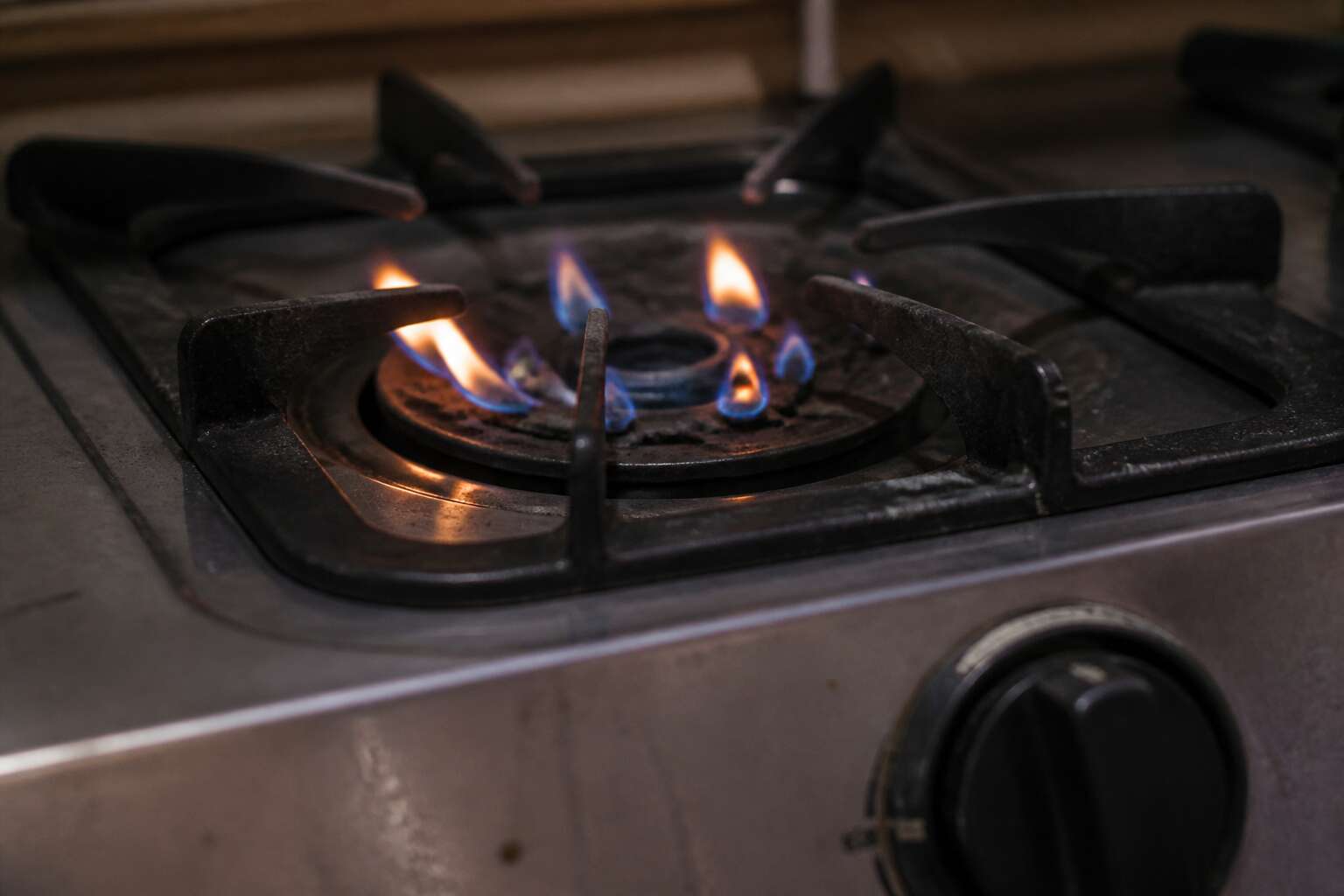
There is a particular comfort in watching a healthy gas flame settle into its work. It burns a steady, clear blue with a sharp inner cone and no amber hints. Around each burner port, the flame heights match, creating an even ring that transfers heat reliably to your pot.
The hallmarks of proper combustion are simple to spot:
- A pure blue colour without orange or yellow tips
- Equal flame height around every single port
- A crisp, defined inner cone
I always look for these signs before adjusting anything on my own stove. They tell me the air and gas mixture is balanced. If you are asking why gas stove flame is low in your kitchen, start by comparing your burners against this baseline, because the visual cue often points straight to the cause.
Why Flame Height Matters for Cooking Efficiency
A wan, apologetic flame is a social blight in any kitchen! It signals that your intentions are good but your execution is weak. When you wonder why gas stove flame is low, consider what that languid fire costs you.
The thermodynamic alacrity of a proper burner is everything. I have watched a fillet resign itself to a rubbery demise on such a flame. A compromised flame stretches a ten minute sear into a thirty minute simmer, muting the crisp edges you promised your guests. It also nudges your gas bill upward, as you compensate for the lacking output with prolonged cooking.
- It delays the Maillard reaction, leaving proteins pale and uninviting.
- It strips vegetables of their structural snap, turning them into sad, boiled relics.
- It forces you to hover, wasting your evening on watch duty.
You are not merely seeking a taller flame. You are reclaiming the pace and precision that make a stove worth owning.
How Air-to-Fuel Ratio Affects the Flame
A gas stove burns clean or it struggles. The deciding factor is the air-to-fuel ratio. When the mixture turns rich with fuel and starved of oxygen, the flame drops. I have opened burners to find the air shutter, the small metal gate at the base, coated in baked-on grime. That blockage restricts oxygen, and it is a common reason why gas stove flame is low.
The venturi effect normally pulls fresh air into the gas stream. A dirty injector or a misaligned shutter breaks this pull. The result is visible:
- A flame that stays close to the burner.
- A coating of dark soot on your pot bottoms.
- A chemical odour lingering after cooking.
The air shutter sits at the burner base. A slight turn starves the flame, a harder turn floods it with air. The right spot takes small adjustments. With the correct ratio, the flame rises and burns blue.
Common Culprits Behind a Weak Flame
Clogged Burner Caps and Ports
The most common reason for a weak flame sits right on the stovetop! Burner caps and ports accumulate a crust of sauce, frying oil, and limescale from hard water. Each tiny hole narrows, so gas exits with less force and the flame turns patchy.
Here are the usual blockages:
- Grease that hardens after repeated cooking sessions
- Food particles shaken loose from the pan during simmering
- Mineral deposits left behind when water evaporates
This explains why gas stove flame is low even with the valve fully open. The physical path matters. Inspecting the burner ring reveals openings that no longer match their original shape. Once grime accumulates, the mixture suffers, but the cause sits on the burner itself.
Blocked Gas Orifice or Nozzle
A single grain of salt can block a burner completely. The orifice, a brass nozzle smaller than a pinhead, meters gas into the burner tube. When debris lodges there, the flow drops dramatically. This is why gas stove flame is low even after you have scrubbed the burner caps clean.
What finds its way into such a narrow passage?
- Dust and lint that settle during months of idle use
- Spider webs and insect fragments, common in South African kitchens
- Cleaning solution residue that dries into a stubborn film
The opening is far smaller than the burner ports, which explains why scrubbing the cooktop surface rarely restores the flame. In my years of troubleshooting stoves, this blockage is the one that fools everyone. Homeowners clean the ring, inspect the caps, and still miss that tiny passage.
Incorrect Air Shutter Adjustment
An incorrect air shutter adjustment produces a flame that looks alive but lacks heat. The shutter sits at the burner tube throat, regulating oxygen before ignition. A quarter turn changes things. Too much air creates a harsh blue flame that lifts off the burner. Too little air produces a soft yellow flame that leaves soot on your pots. Neither performs well.
In my years working on South African stoves, this issue goes unnoticed far too often. It frequently explains why gas stove flame is low, even with clean burners.
Signs of a misadjusted shutter:
- Flames that flicker and drift
- A strong smell of gas around the burner
- Black residue on cookware within minutes
The fix takes seconds, but the diagnosis takes patience. Most households never inspect the shutter. That single missing step keeps the flame weak for years.
Worn-Out Igniter or Spark Module
Every South African kitchen hears the igniter click when a burner turns on. But when that spark weakens, the valve hesitates. That hesitation makes gas and flame meet unevenly, and households ask why gas stove flame is low when burners fire.
In my work, a worn spark module loses timing. It sends signals late or weak, so gas pushes through before ignition. The flame catches only where gas pools, leaving a thin ring. The burner looks alive, but heat output drops!
Signs that point to the igniter or spark module:
- Clicking continues after the flame appears
- The flame shrinks when you release the knob
- Only one burner misbehaves
These symptoms mimic blocked ports or air issues, so the module gets ignored. Yet a failing module explains why gas stove flame is low even when burners stay clean. The spark module controls every ignition; when it ages, the flame loses force.
Defective Gas Regulator
A weak flame on every burner at once? That points to the gas regulator. This small device, mounted on the LPG cylinder, steps down the high pressure in the tank to a level your stove can use. When it fails, it restricts the flow. The flame drops, and a simple boil takes much longer.
In my years inspecting stoves across South African homes, I have seen regulators that look healthy yet deliver inconsistent pressure. Cleaning the burner ports and adjusting the air shutter will not correct it. The problem sits at the cylinder, not the stove.
Signs that the regulator is at fault:
- All burners weaken together, not just one
- The flame sinks when another appliance draws gas
- A faint hiss comes from the regulator body
That uneven supply is one quiet reason why gas stove flame is low even after a thorough service. A technician can test the regulator output with a manometer and verify the exact pressure drop.
Clogged Burner Ports and How to Clean Them
Signs of a Blocked Burner Port
When the flame on your gas stove sputters or leans to one side, a blocked burner port is often the culprit. These tiny openings distribute gas evenly across the burner ring. A single obstructed port disrupts the entire pattern, which explains why gas stove flame is low even when the stove is clean.
You will notice several telltale signs:
- Yellow tips instead of a steady blue flame
- Visible gaps where no flame appears
- A clicking sound that lingers after ignition
Cleaning these ports takes patience. Turn off the gas and let the burner cool completely. Remove the cap and use a thin wire or a straightened paperclip to clear each opening gently. Do not use toothpicks; they break and make the blockage worse. Work methodically around the ring, then brush away loose debris with a soft cloth. Once reassembled, test the flame. This targeted maintenance restores a healthy burn, and next time you wonder why gas stove flame is low, you will know where to look.
Step-by-Step Cleaning with a Brush or Pin
When the flame on your stove turns uneven and weak, clogged burner ports are the usual suspects. A pin or a stiff brush works far better than harsh chemicals. I prefer a safety pin, because it reaches deep into each opening without scratching the metal.
Start by turning off the gas and letting the burner cool completely. Remove the cap and the base ring. Then, follow this order:
- Hold the burner ring over a sink and tap it to dislodge loose crumbs.
- Work a pin through each port, moving slowly to avoid bending the metal.
- Scrub the entire surface with a dry brush to remove greasy film.
Reassemble the burner and light it. If the flames stand upright and blue, you have fixed the issue. This is often the real reason why gas stove flame is low, even when the rest of the appliance looks spotless. The blockage hides inside the ring, not on the surface. What a difference a clean port makes!
Using Vinegar and Baking Soda for Stubborn Debris
Stubborn debris does not yield to a pin. It hardens into a brittle crust, and that is exactly when the question of why gas stove flame is low demands a chemical answer.
Vinegar and baking soda react with a controlled fizz that lifts the crust from the port surface. No metal scratches, no force required. The steps are:
- Remove the ring and lay it on an old cloth.
- Pour vinegar over the ports, then add a spoonful of baking soda.
- Let the mixture bubble for ten minutes.
- Rinse under warm water and dry.
What remains in the sink is the residue of daily cooking. We blame the regulator, the gas line. Yet the truth is that a stove port holds onto what we refuse to see. I have noticed that why gas stove flame is low often requires patience with vinegar and baking soda, not anger.
Reassembling the Burner Correctly
Reassembly is where good intentions go to die. A burner ring seated a mere two millimetres off its cradle will create an uneven flame, or worse, a gas leak that smells like a reproach. The cap must click into place with a satisfying settle, not a wobbly perch. I have seen the root cause of why gas stove flame is low traced to a cap that was simply placed askew after a thorough clean, a quiet tragedy of domestic haste.
The alignment demands a bit of theatre. You must look at the burner base, not through it. The ignition electrode, that small metal prong, needs a clear view of the cap. Your reassembly checklist is simple:
– Seat the ring so the locating pins slide into their grooves.
– Rotate the cap gently until it feels level, not tilted.
– Test the fit by tapping the edge lightly with a finger.
If the cap rocks, it is wrong. A stable base is the final act. After a deep clean, I always run a quick test fire. The flame should be a crisp, blue cone, not a lazy yellow lick. When the air shutter is left untouched and the ports are clear, a proper assembly completes the ritual. There is a quiet satisfaction in a stove that lights on the first click, a small victory that answers the stubborn question of why gas stove flame is low.
Gas Supply and Pressure Issues
Checking the Gas Valve Is Fully Open
Nearly a third of low flame complaints trace back to something far simpler than a faulty part: the supply line itself. Gas is a creature of pressure, and when that pressure dips, the flame slumps in protest. Before you dismantle anything, look at the valve.
Many people twist the knob until it stops, but that isn’t always enough. On many units, a quarter turn is all that separates a full supply from a starving one. A valve left at a 45 degree angle throttles the gas flow dramatically. This is one of the most frequent reasons for a weak burner, and it costs nothing to fix.
If the handle runs parallel to the pipe, it is open. A perpendicular handle means it is shut. Visual checks are quick, but stubborn valves can be misleading.
– Sometimes the interior mechanism sticks, even when the handle moves freely.
– A partially closed valve from a previous maintenance session is a common culprit.
– Check the flexible hose for kinks or sharp bends that restrict flow.
Where multiple burners are affected, the issue is often upstream. A single weak flame might point to a burner issue, but a whole hob struggling for breath suggests the supply itself needs attention. Tracing the line from the wall connection to the regulator clarifies whether the problem lies in the valve or the network behind it.
Low Pressure from the Main Gas Line
When the main gas line delivers low pressure, every burner feels the pinch. This is a common reason why gas stove flame is low, and it often goes unnoticed because the stove still lights. Municipal supply networks in South Africa can fluctuate during peak hours, especially in winter!
What does that mean for your cooking? A flame that shrinks when you open another appliance. A hob that takes forever to boil water. The pressure from the mains is not something you can adjust at the stove.
- Check if neighbours have similar issues.
- Listen for hissing in the meter or line.
- Compare flame strength at different times of day.
If the pressure is consistently weak, the problem lies outside your home, not in the stove itself. Monitoring your usage pattern helps you confirm it.
Problems with a Shared Gas Supply or Long Hose
A single 9kg cylinder feeding both a stove and a geyser creates a competition. Turn on the geyser and watch the stove flame shrink. The gas follows the bigger draw, and the geyser always wins. A long hose adds to the misery. Every extra metre of rubber introduces friction, reducing pressure before the gas reaches the burner. This is why gas stove flame is low even when the cylinder feels full.
- Does the stove share a line with a geyser, heater, or braai?
- Is the hose longer than the manufacturer recommends?
- Is the hose kinked behind the cupboard?
These arrangements are common in South African kitchens. The stove is usually innocent. The plumbing is the real culprit.
How to Test Gas Pressure Safely
Pressure is the determining factor for a healthy flame. A weak burner often points to the regulator or supply line, not the stove itself. To verify, use a manometer, a tool that measures gas pressure in kilopascals. Connect it to the test point on the line, then light the stove.
- Open a single burner fully.
- Record the reading; it should satisfy 2.8 to 3.0 kPa for LP gas.
- Repeat while the geyser runs to notice any drop.
That drop shows if the supply is struggling. This is why gas stove flame is low even when the cylinder feels full. Safety is non-negotiable, so never rely on smell or flames to judge pressure. Only a calibrated gauge gives the truth.
When the Utility Company Needs to Be Involved
When the manometer shows a stubborn drop, I know the stove is not the culprit. The suspicion shifts to the utility company and their buried infrastructure. A sustained low reading, especially while the geyser runs, points to a supply line that cannot keep up with demand.
Households on piped gas share the network with many other users. One undersized main or a corroded valve means everyone downstream feels the effect. This is the scenario where why gas stove flame is low becomes a neighbourhood issue, not a kitchen one.
- Neighbours report weak flames around the same time as you
- The manometer reading never recovers even with all burners off
- You smell gas near the meter box or along the street line
Do not dig, adjust, or tamper with the meter. The utility must test their network and rectify the fault at their own cost. Your only task is to report the pressure loss and wait for them to act.
When to Call a Professional
Signs of a Gas Leak or Unusual Odor
That faint rotten egg smell in your kitchen is not something to ignore. Municipal gas supplies in South Africa include an odorant called mercaptan so you can detect leaks before they turn dangerous. If you notice this scent alongside a weak burner, the low flame is only part of the problem. That smell is your warning system, and it deserves your full attention!
There are clear moments when a DIY fix stops making sense:
- A hissing sound near the stove that continues after you turn the knobs off
- Yellow or orange flames that flicker wildly instead of burning steady blue
- Headaches, dizziness, or nausea that fade when you leave the room
In my experience, each of these points to a leak rather than a blocked burner port. A professional technician can test the line pressure and inspect the fittings with specialized equipment. The reason why gas stove flame is low could be a failing regulator, but if gas is escaping, the priority shifts entirely. Call your supplier or a certified gas installer immediately, and keep windows open until help arrives.
Persistent Low Flame After Cleaning and Adjustments
You have cleared every port, scrubbed the caps, and corrected the air shutter. Yet the burner still produces a thin, low flame. That persistence tells you the reason why gas stove flame is low is not surface debris. It lives inside the valve assembly or the gas line itself.
At this stage, DIY reaches its limit. A certified technician will bring a manometer and a leak detector. They can test whether the regulator is starving the burner and measure pressure under load. Consider scheduling an inspection if you notice:
- The flame weakens when another appliance is running
- The burner only works after repeated ignitions
- Flame adjustment knobs do nothing
These symptoms point to internal faults that no pin or brush can solve. Professional diagnosis is the safe way forward.
Yellow or Sooty Flames as a Safety Concern
Yellow flames mean incomplete combustion, plain and simple. A healthy burner burns blue and steady. When the flame turns yellow and leaves black residue on your pots, your stove is producing soot and carbon monoxide. That is not a quirk. It is a safety issue, and it is closely tied to why gas stove flame is low in some cases. The difference is that a low blue flame only ruins your dinner. A yellow flame can ruin your air quality.
Call a certified technician when:
- Yellow or orange flames appear on more than one burner
- Black soot forms on cookware or the burner ring
- Flames are unsteady or produce a strange smell
The technician will inspect the burner assembly, check the gas valve, and measure pressure with a manometer. They will also test that combustion gases exit properly instead of leaking back into your kitchen.
Warranty and Service Considerations
Your warranty only holds up if you respect its terms. Poking a pin into the burner ports might fix a low flame, but it can void your coverage. Before dismantling anything, check the manufacturer’s service requirements. Many brands require certification for any repair, even a simple clogged nozzle.
If the stove is still under warranty, a technician will diagnose why gas stove flame is low and file the paperwork properly. Amateur fixes leave traces. A scratched valve or misaligned burner can make a manufacturer reject your claim.
Gather these details before calling:
- Model and serial number
- Photos of the burner and flame
- Proof of purchase
South African service agents often request proof of purchase and installation records. Ask for a written quote before authorising work. That protects your warranty and your wallet.


0 Comments